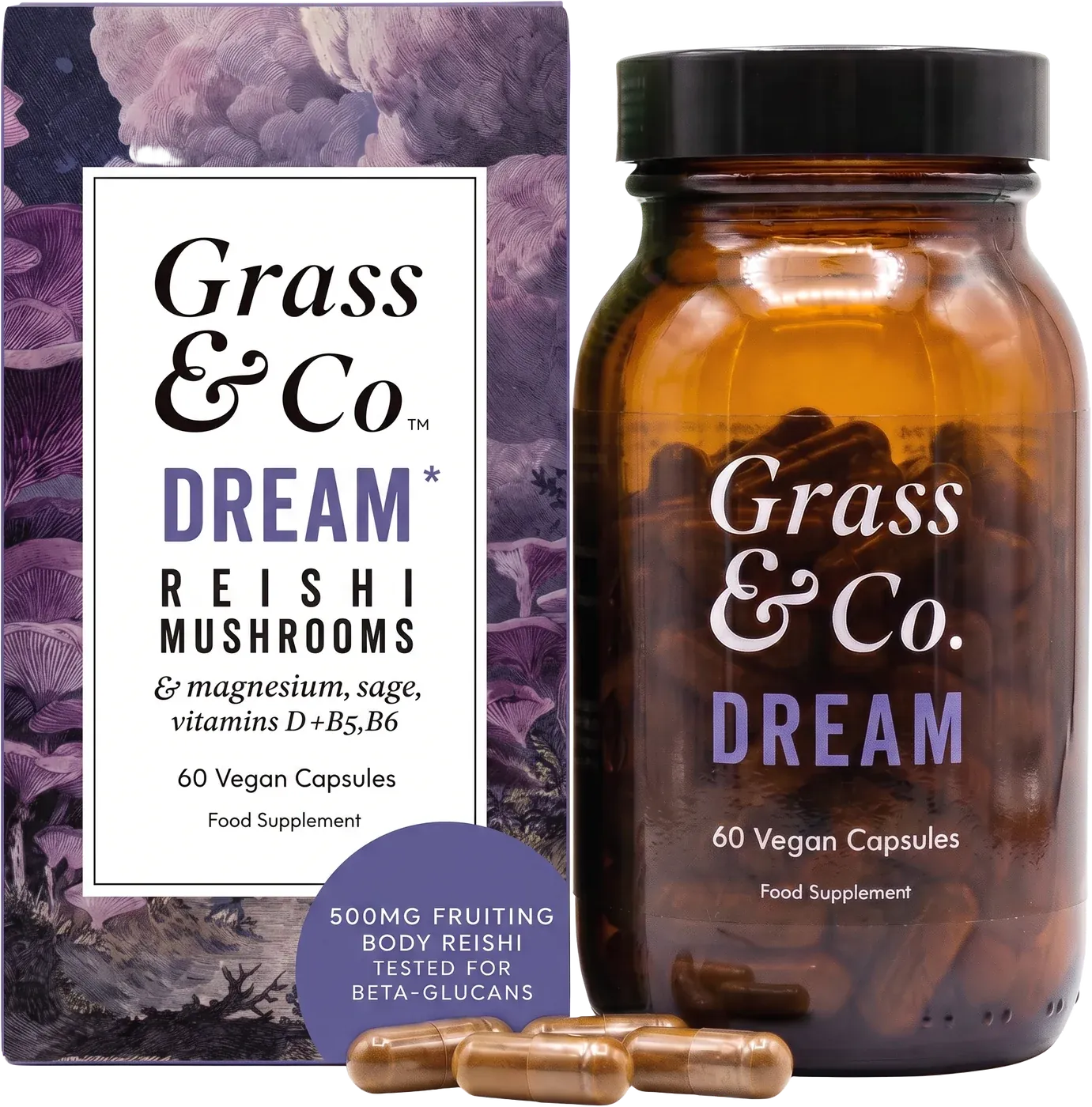
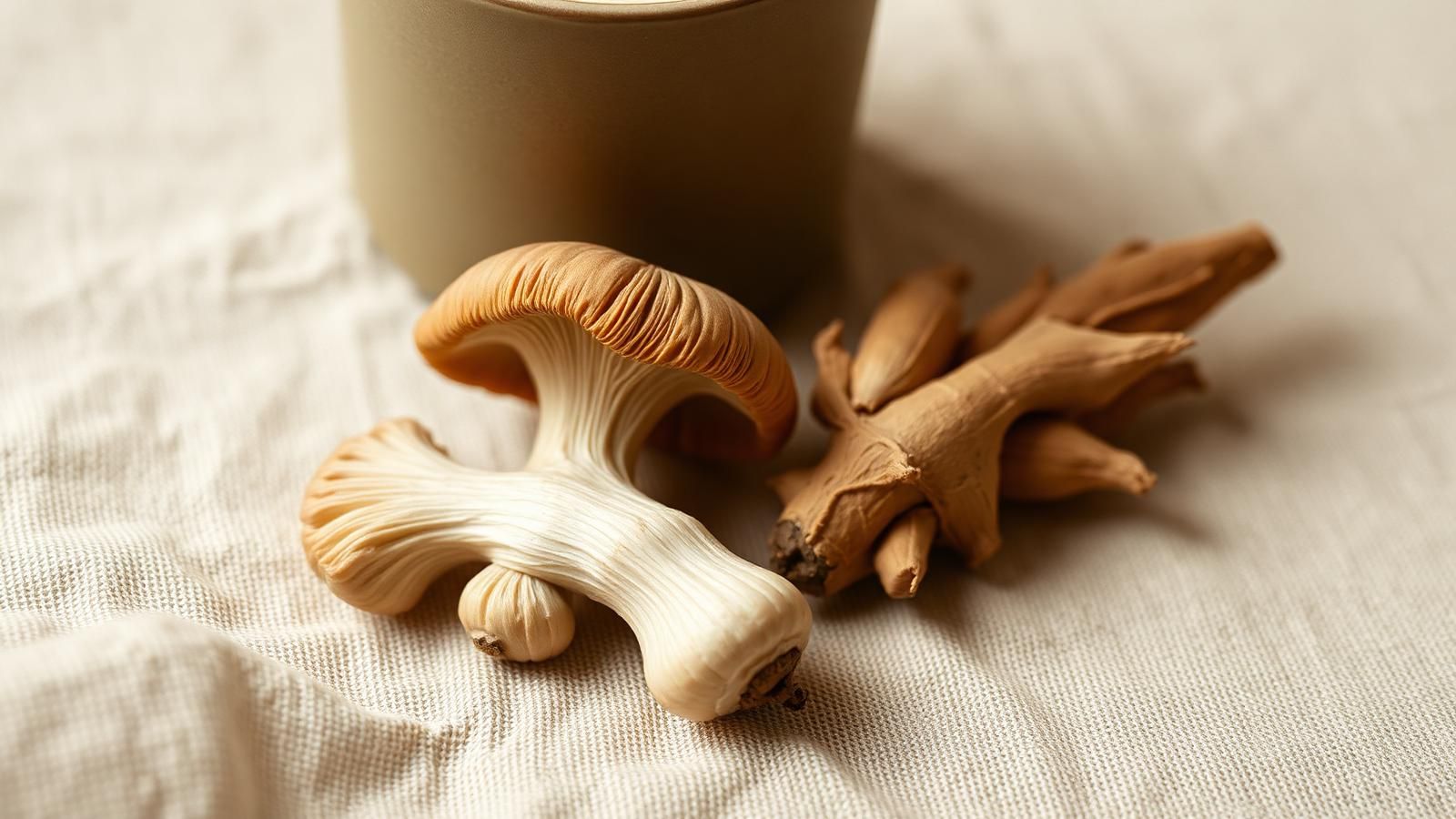
Known in China as Lingzhi and documented for over 2,000 years, Reishi was reserved for emperors and sipped as an evening tonic by Taoist monks seeking calm and balance. It remains one of the most celebrated botanicals in the entire Eastern tradition.
The Herbarium / N° 03
Reishi
Ganoderma lucidum
Functional mushroom
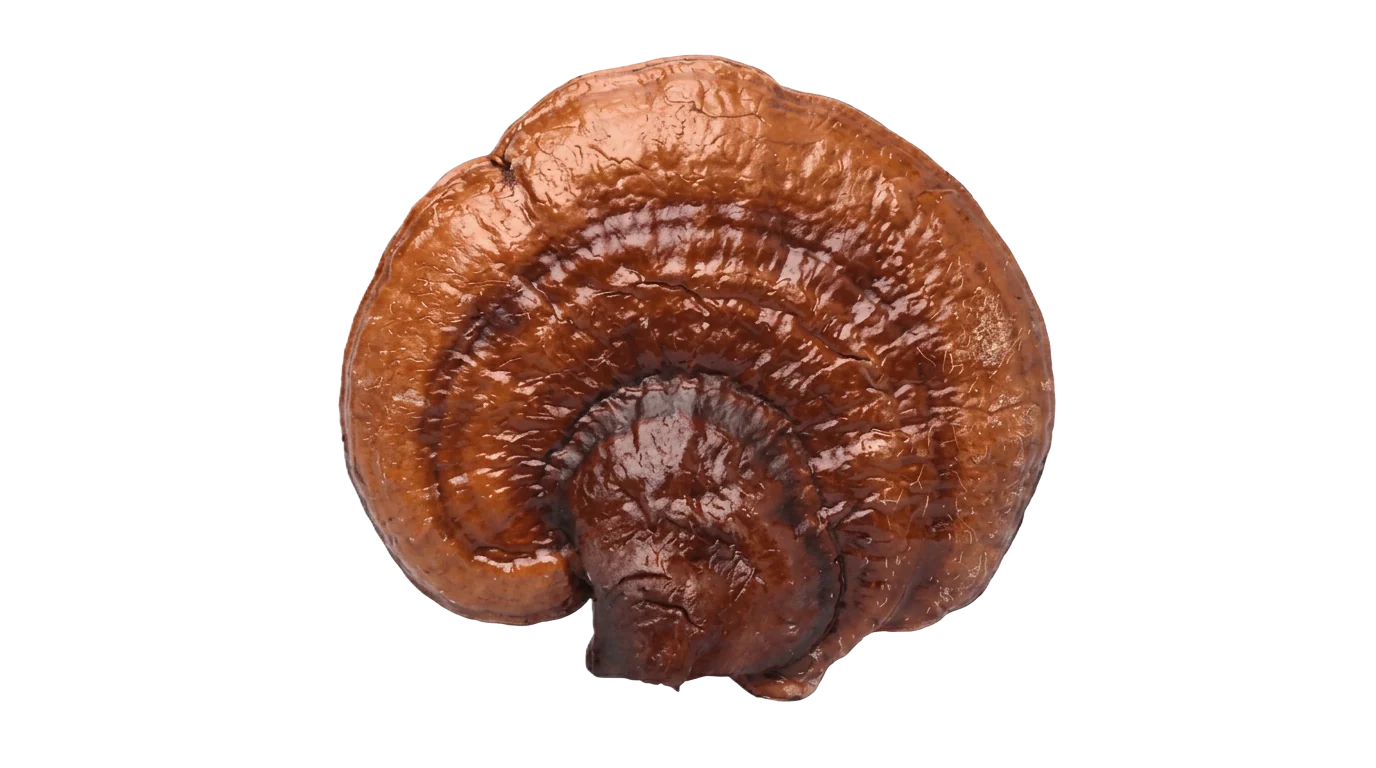
A lacquered red shelf fungus so revered it earned the name 'mushroom of immortality'.
Cultivated on hardwood in shade houses that recreate its native forest, harvested at full maturity and fruiting-body extracted. Manufactured in the UK.
- Triterpenes
- Responsible for the famously bitter taste.
- Beta-glucans
- The polysaccharide fraction measured in quality extracts.
- Ganoderic acids
- A triterpene family named after the mushroom itself.
Dual-extracted fruiting body, hot water for the polysaccharides, ethanol for the triterpenes, because the two groups don't dissolve in the same solvent.
Reishi has been catalogued in Chinese materia medica for around two thousand years and studied in modern labs mostly for its immune-signalling polysaccharides. Human data remains limited.
- Wild Reishi is so rare on old-growth hardwood that historical Chinese emperors sent search parties for it.
- The kidney-shaped cap has a lacquered, varnished sheen, hence Ganoderma, 'shining skin'.
- It's genuinely bitter. If a Reishi product tastes of nothing, ask what's actually in it.
LingzhiMushroom of immortalityMannentake
Traditional use reflects historical and cultural practice, not licensed health claims. Always read the label and consult a healthcare professional if unsure.
Where you'll find it