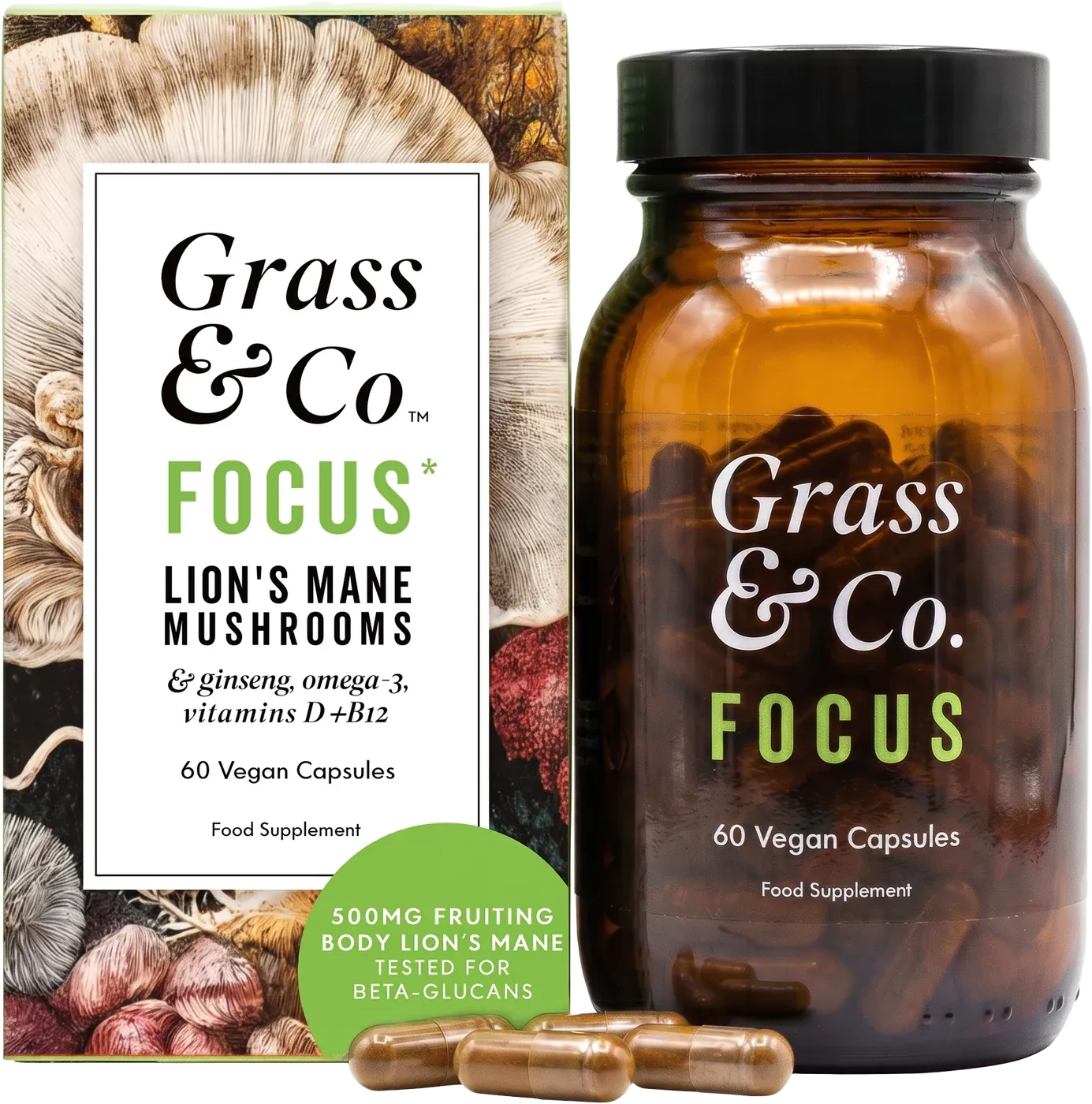
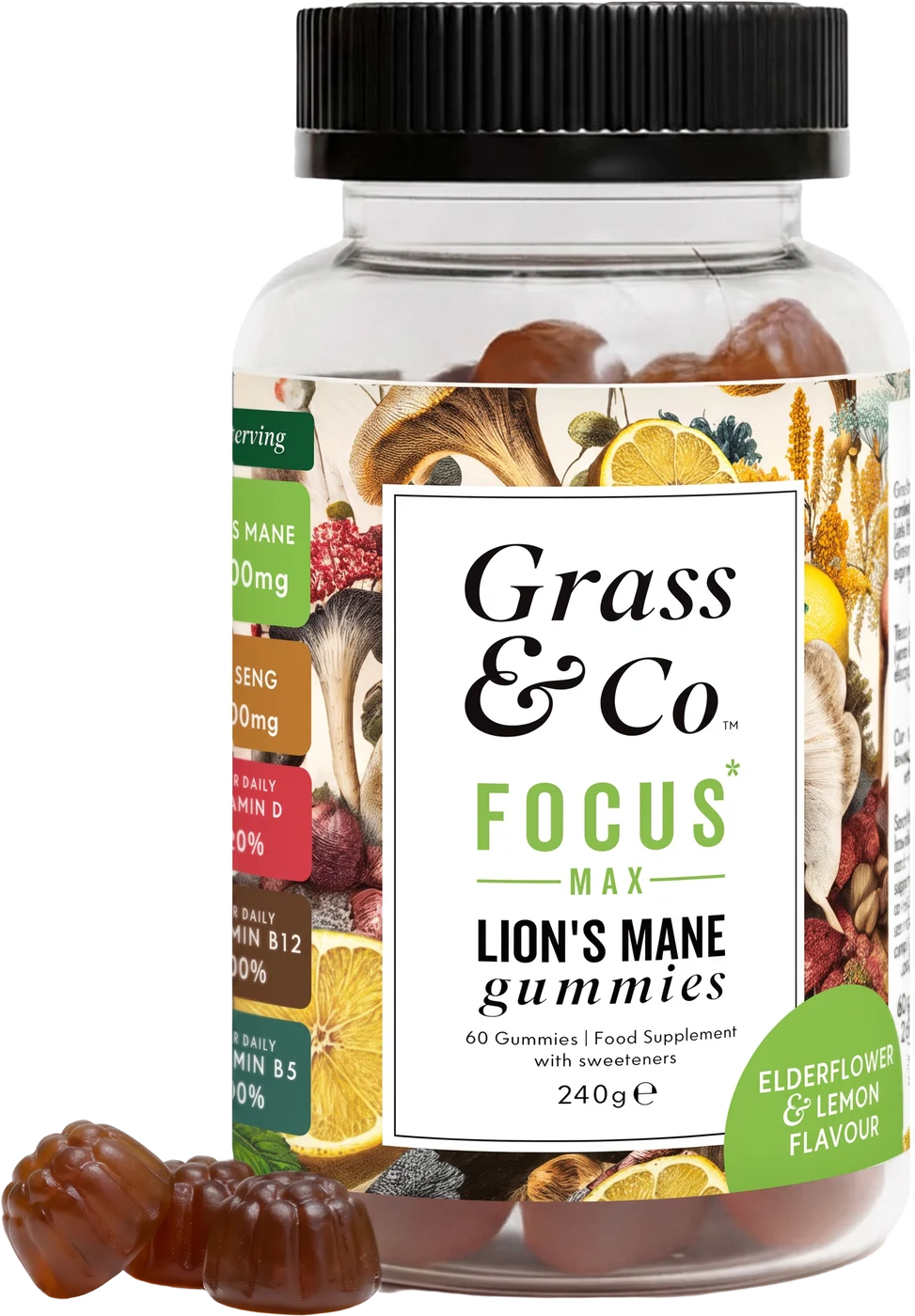
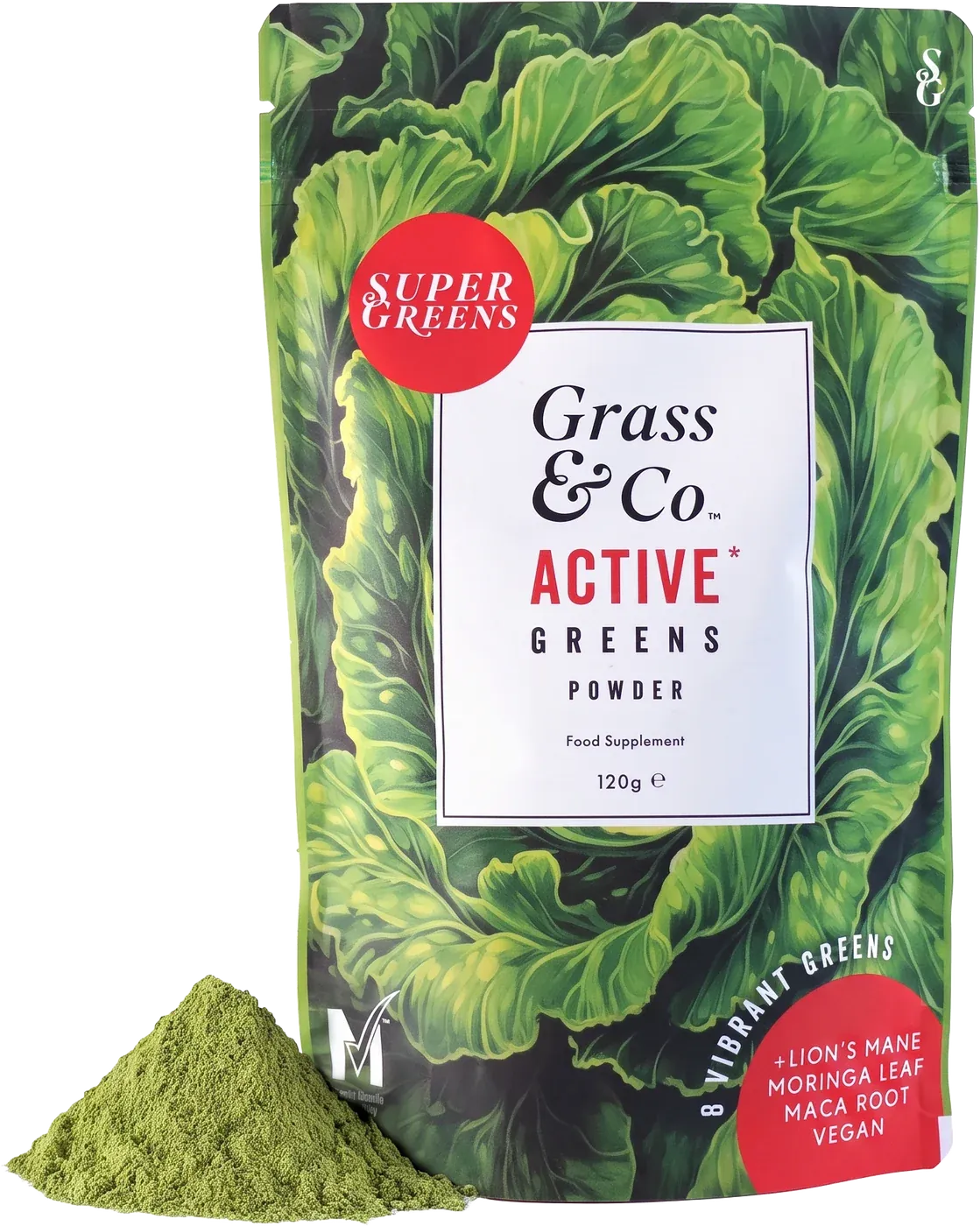
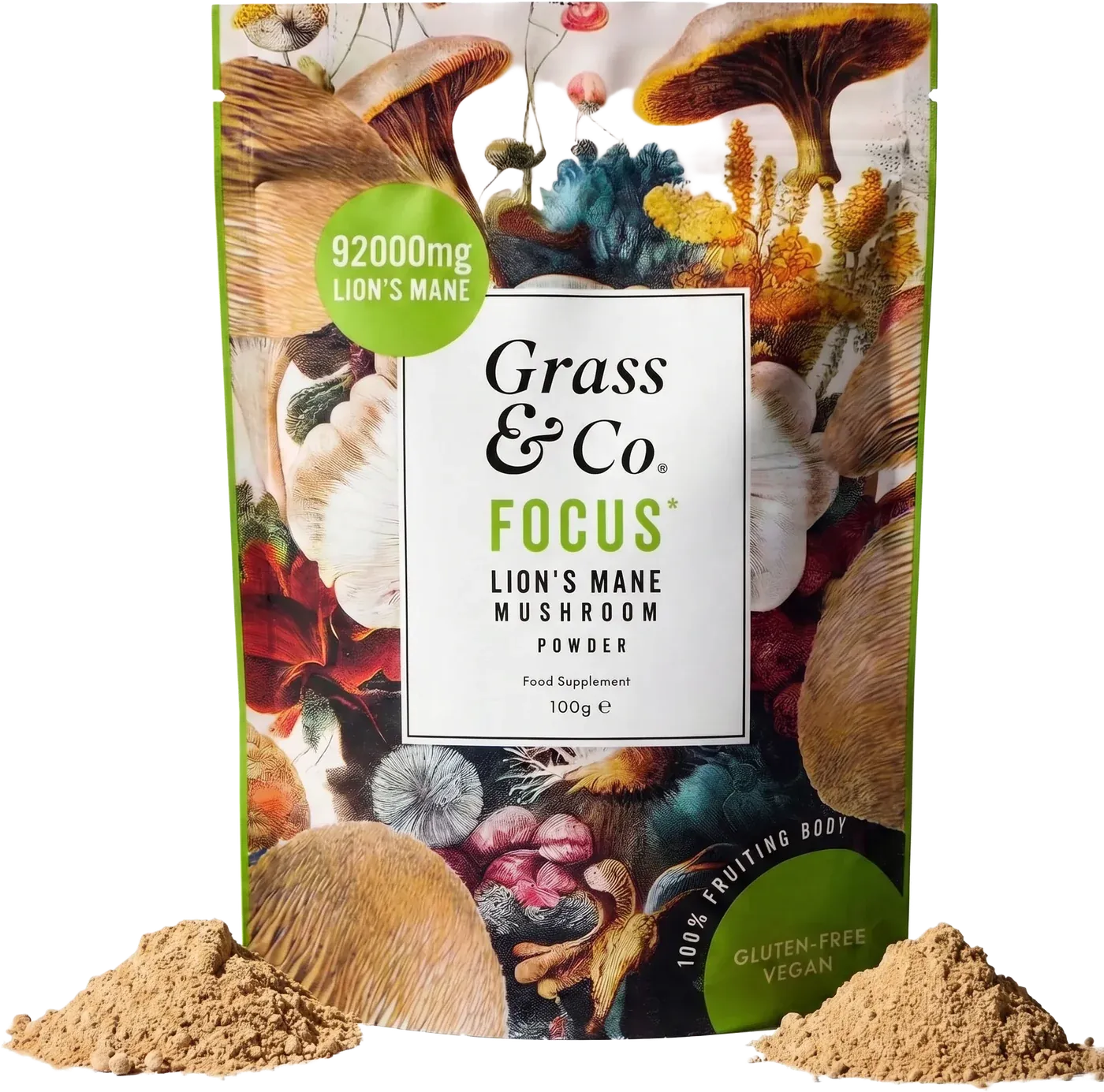
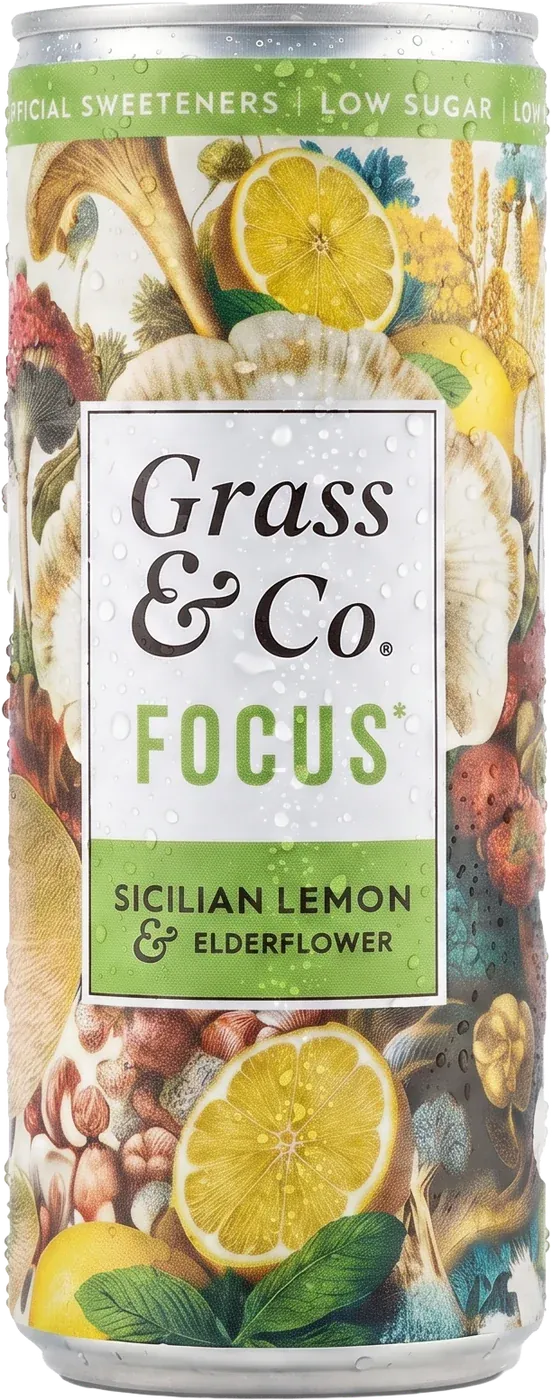
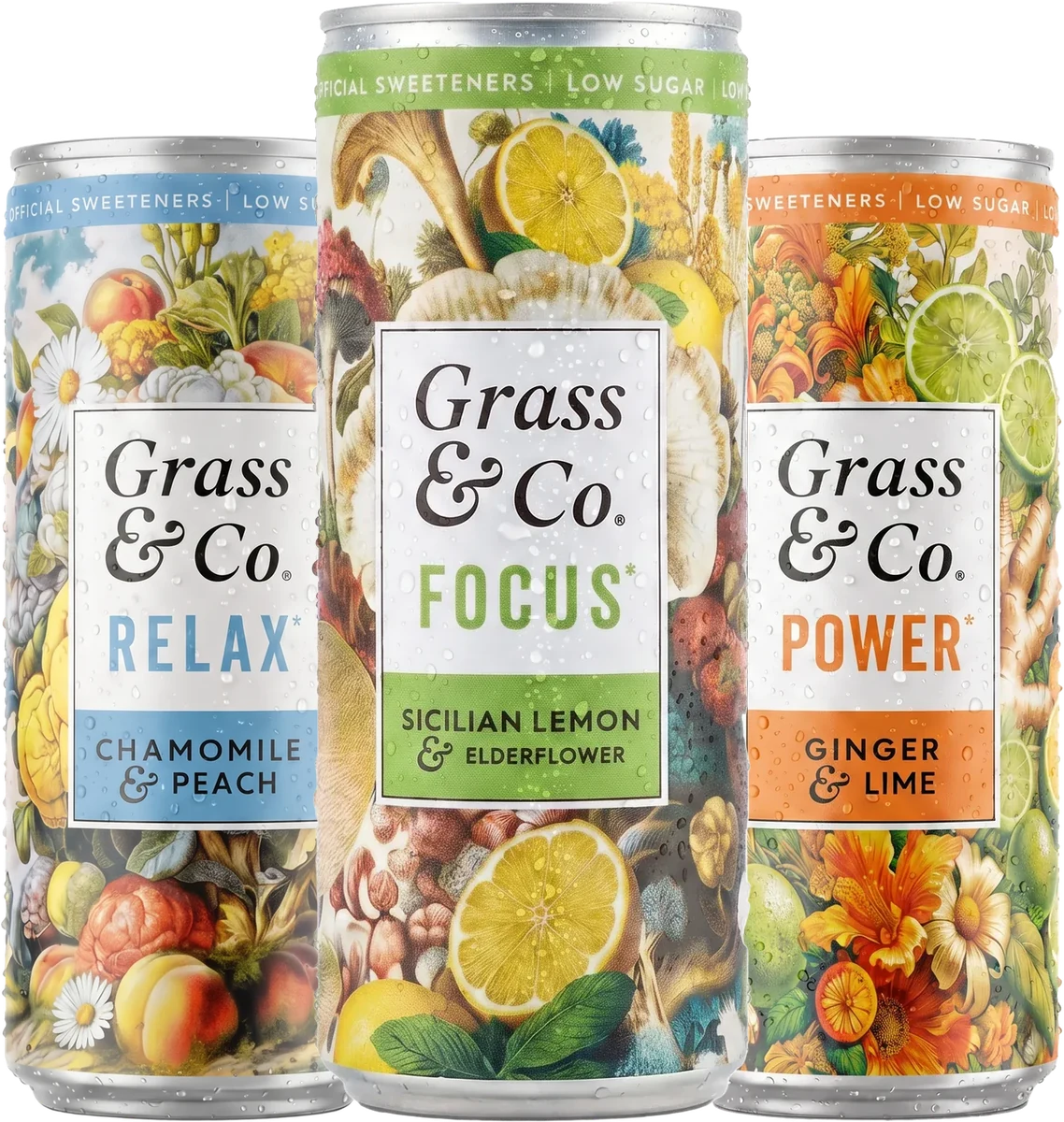
Prized in East Asian herbal practice for centuries, Lion's Mane tea was reputedly brewed by Buddhist monks to support concentration during long meditation. In Japan it's known as Yamabushitake, after the mountain monks who sought it out.
The Herbarium / N° 02
Lion's Mane
Hericium erinaceus
Functional mushroom
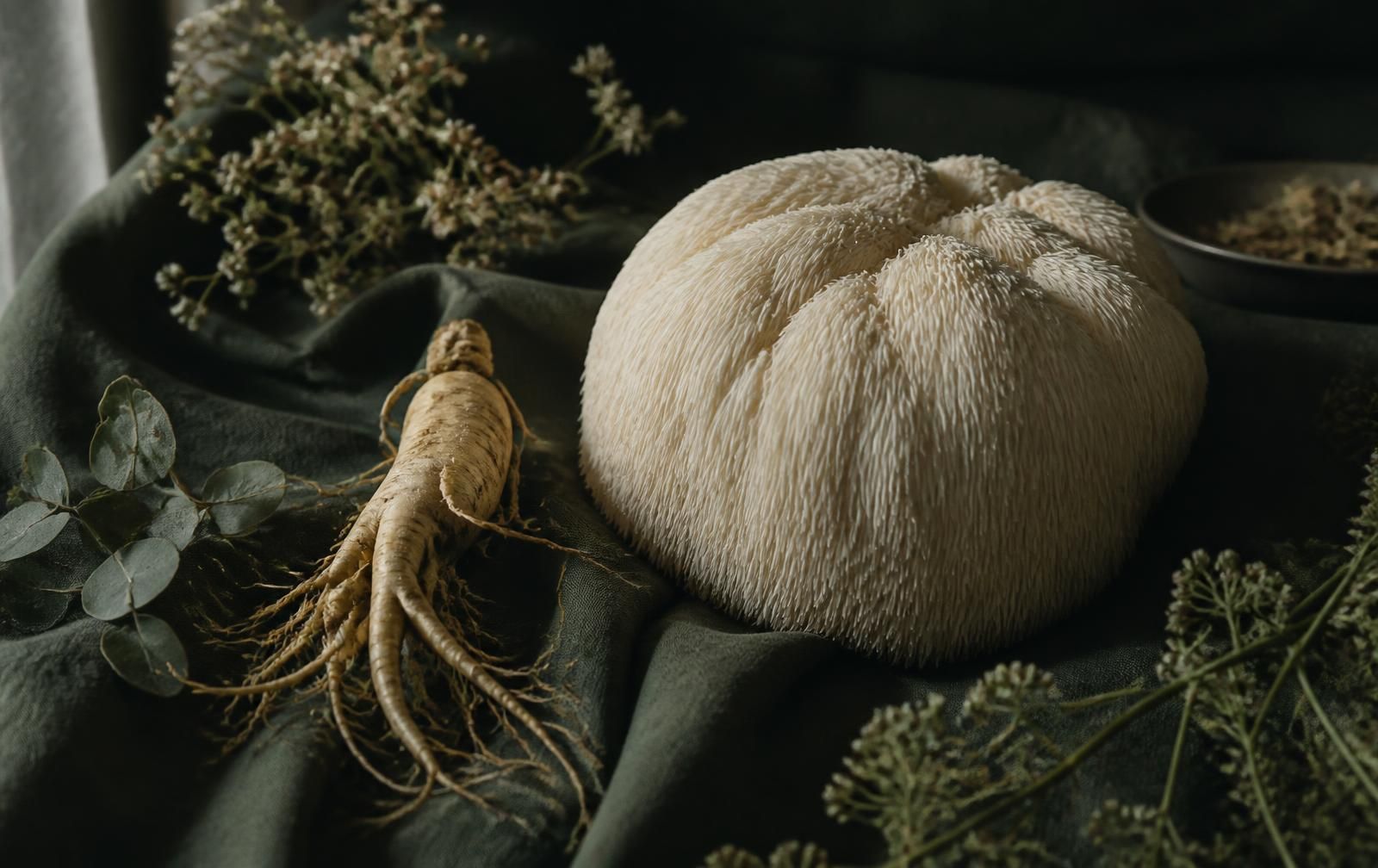
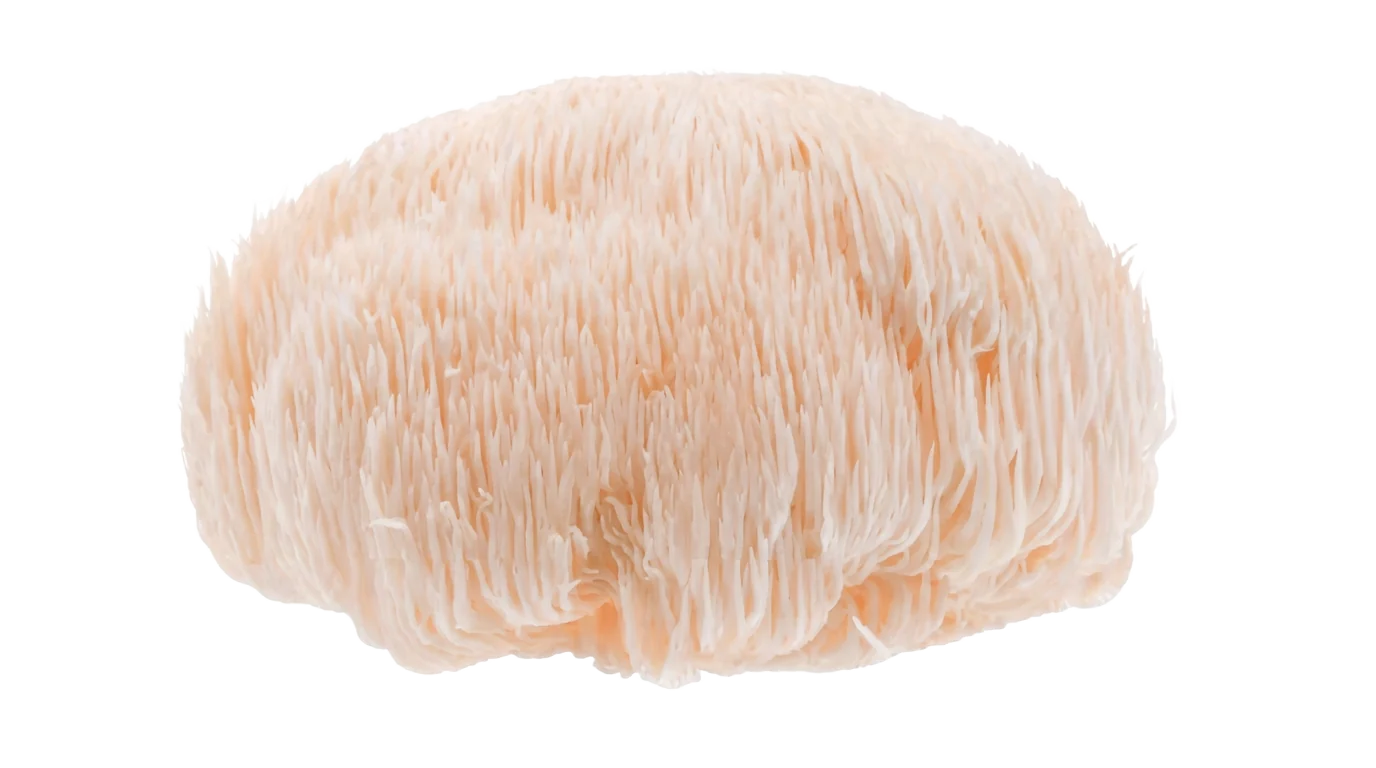
The shaggy white 'smart mushroom' that grows in cascading spines on hardwood trees.
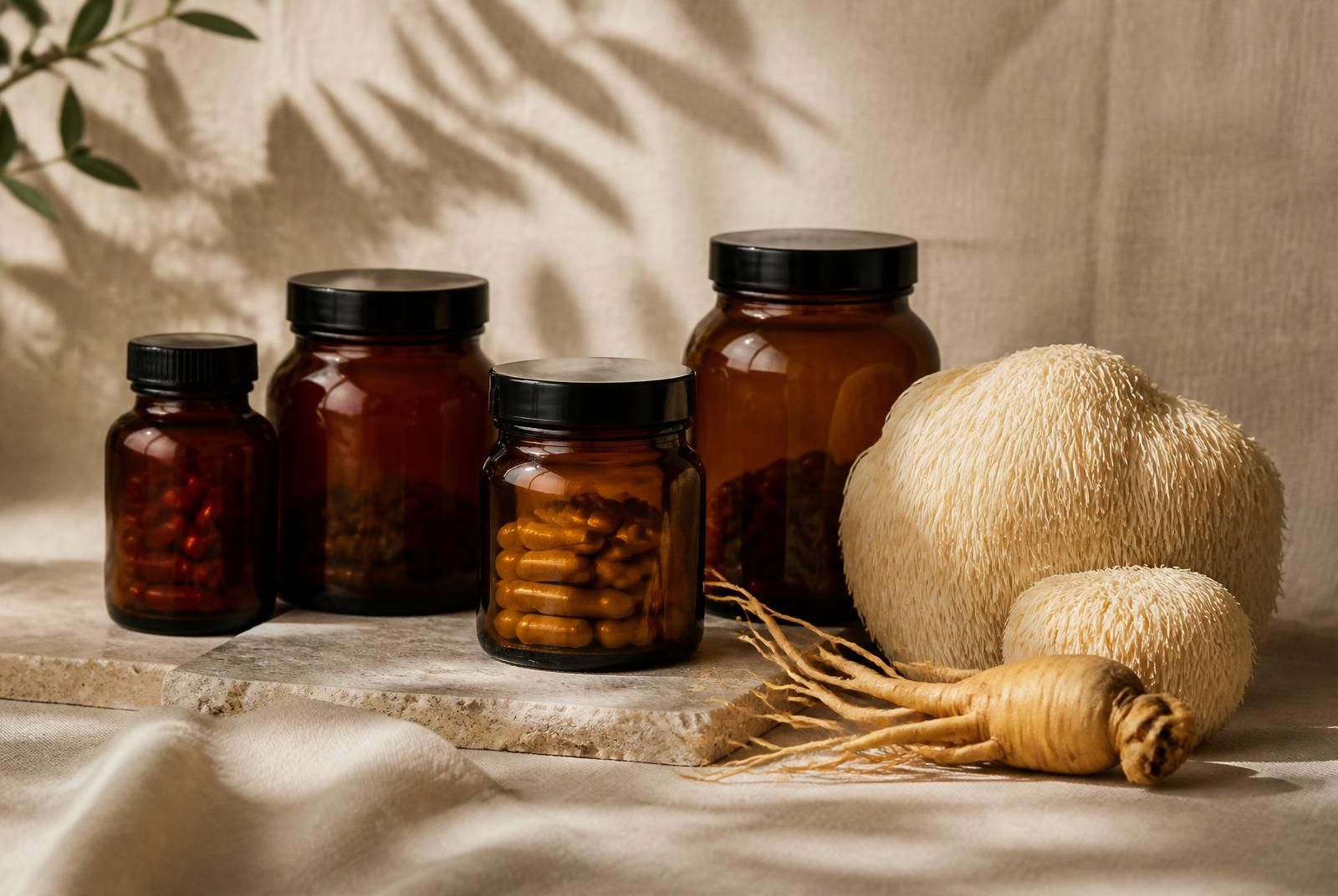
Organically cultivated on natural hardwood substrate with fresh air and sunlight, conditions that mimic the wild, then extracted from 100% fruiting bodies. Blended and manufactured in the UK.
- Hericenones
- Found in the fruiting body, the part above ground.
- Erinacines
- Concentrated in the mycelium, the root-like network.
- Beta-glucans
- The structural polysaccharides used to benchmark extract quality.
Fruiting-body extract, hot-water extracted and standardised for beta-glucans rather than crude 'polysaccharides', a number that can be inflated by starch from grain substrate.
Lion's Mane is one of the most studied functional mushrooms, with published work spanning nerve growth factor in cell models and small human trials on cognition in older adults. Evidence is early-stage and not sufficient for authorised health claims in the UK.
- It grows on dying hardwoods, beech and oak, in cascading white spines rather than a cap and stem.
- Japanese Buddhist monks of the Yamabushi tradition gave it its other name; the mushroom's fringe resembles their robes.
- Culinary chefs use it as a scallop substitute; the texture is uncannily close when seared.
Hou Tou Gu (monkey head mushroom)YamabushitakeBearded tooth
Traditional use reflects historical and cultural practice, not licensed health claims. Always read the label and consult a healthcare professional if unsure.
Where you'll find it