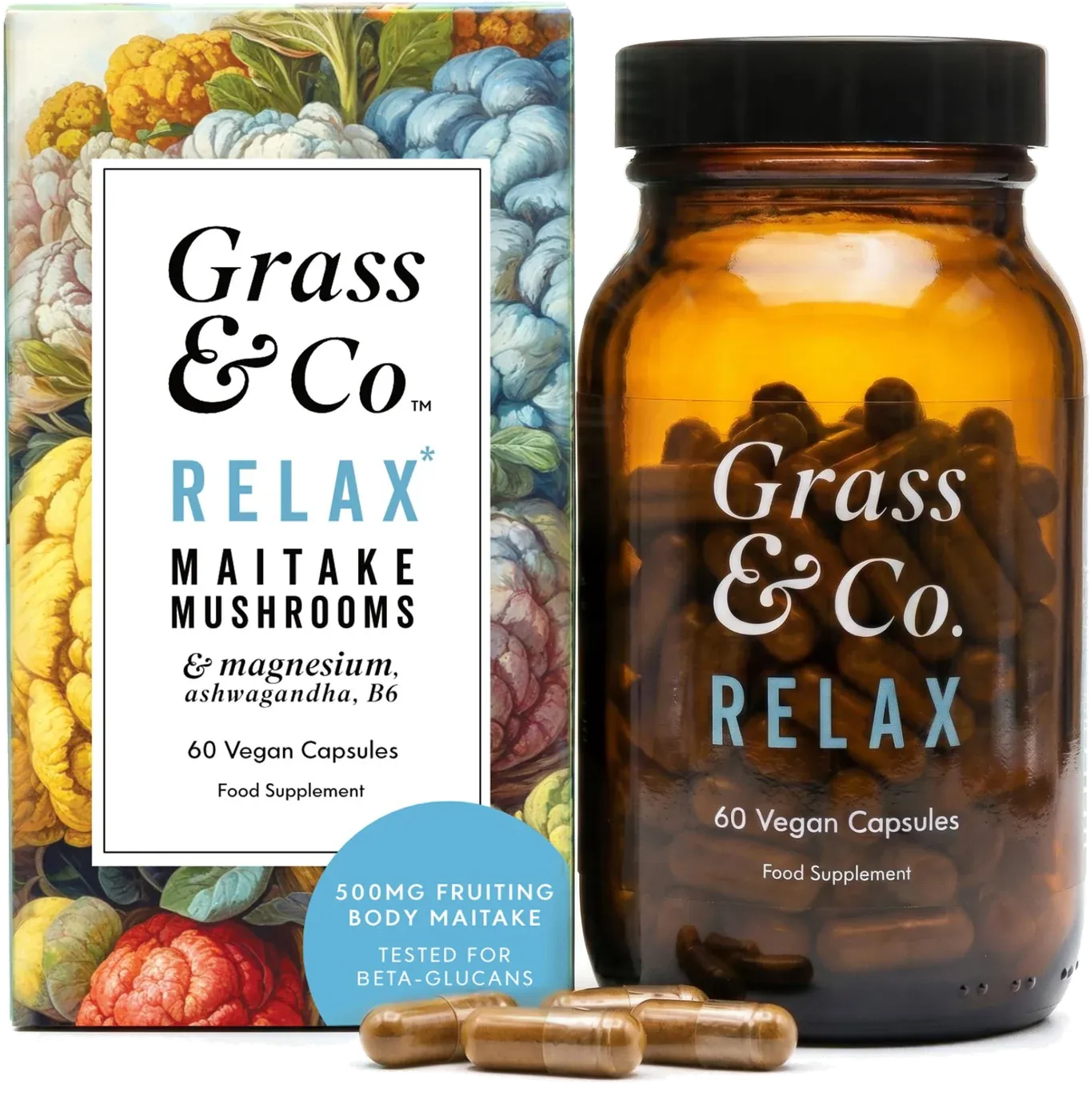
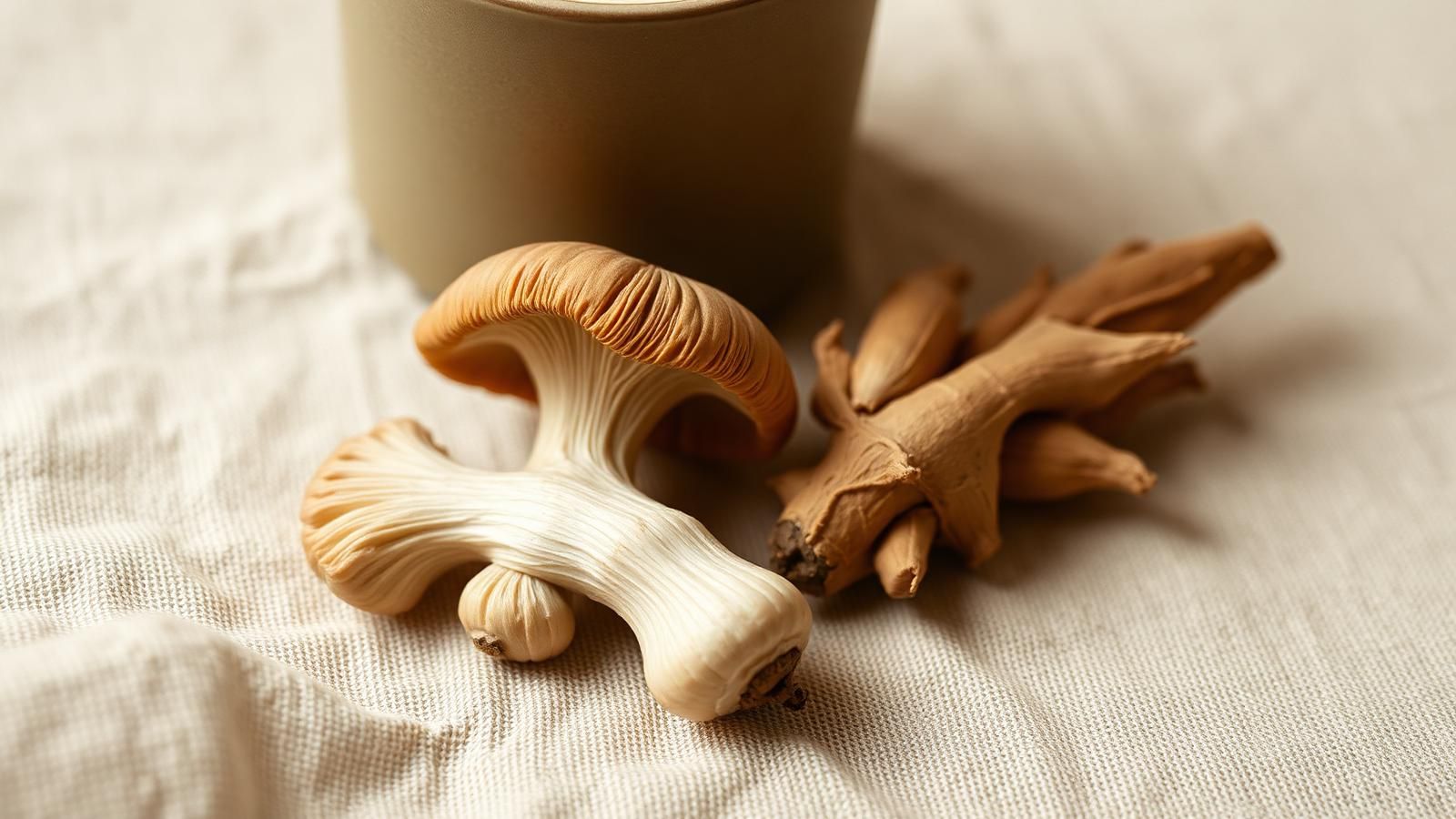
In feudal Japan, a good Maitake find was reputedly worth its weight in silver, and foragers guarded their secret oak groves for generations. It has been both food and adaptogenic tonic in Japanese and Chinese practice for centuries.
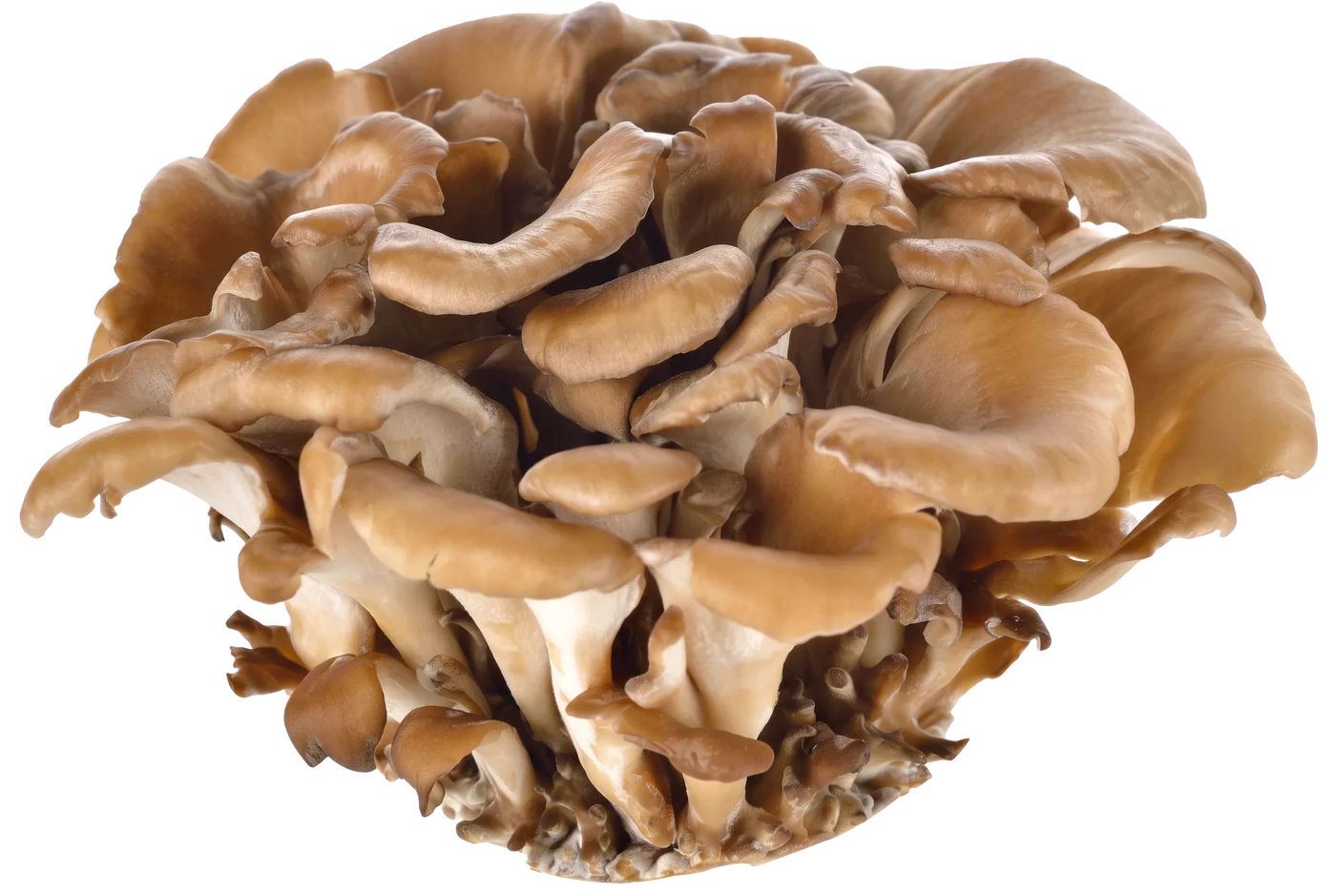
The Herbarium / N° 04
Maitake
Grifola frondosa
Functional mushroom
The 'dancing mushroom', foragers in feudal Japan were said to dance with joy on finding one.
Grown organically on natural wood substrate, never on grain, in carefully selected regions with ideal growing conditions, then fruiting-body extracted. Manufactured in the UK.
- Beta-glucans (D-fraction)
- The most-studied polysaccharide fraction in Maitake.
- Ergosterol
- The fungal sterol that becomes vitamin D under UV light.
Hot-water fruiting-body extract, grown on hardwood rather than grain so the beta-glucan reading reflects mushroom, not filler.
Maitake polysaccharides have been examined in immunology and metabolic research since the 1980s, largely in laboratory and animal models.
- 'Maitake' means dancing mushroom, foragers are said to have danced on finding one, because a single cluster can weigh over 20kg.
- It fruits at the base of old oaks, returning to the same tree year after year.
- In Japan it was once traded by weight against silver.
Hen of the woodsDancing mushroomGrifola frondosa
Traditional use reflects historical and cultural practice, not licensed health claims. Always read the label and consult a healthcare professional if unsure.
Where you'll find it