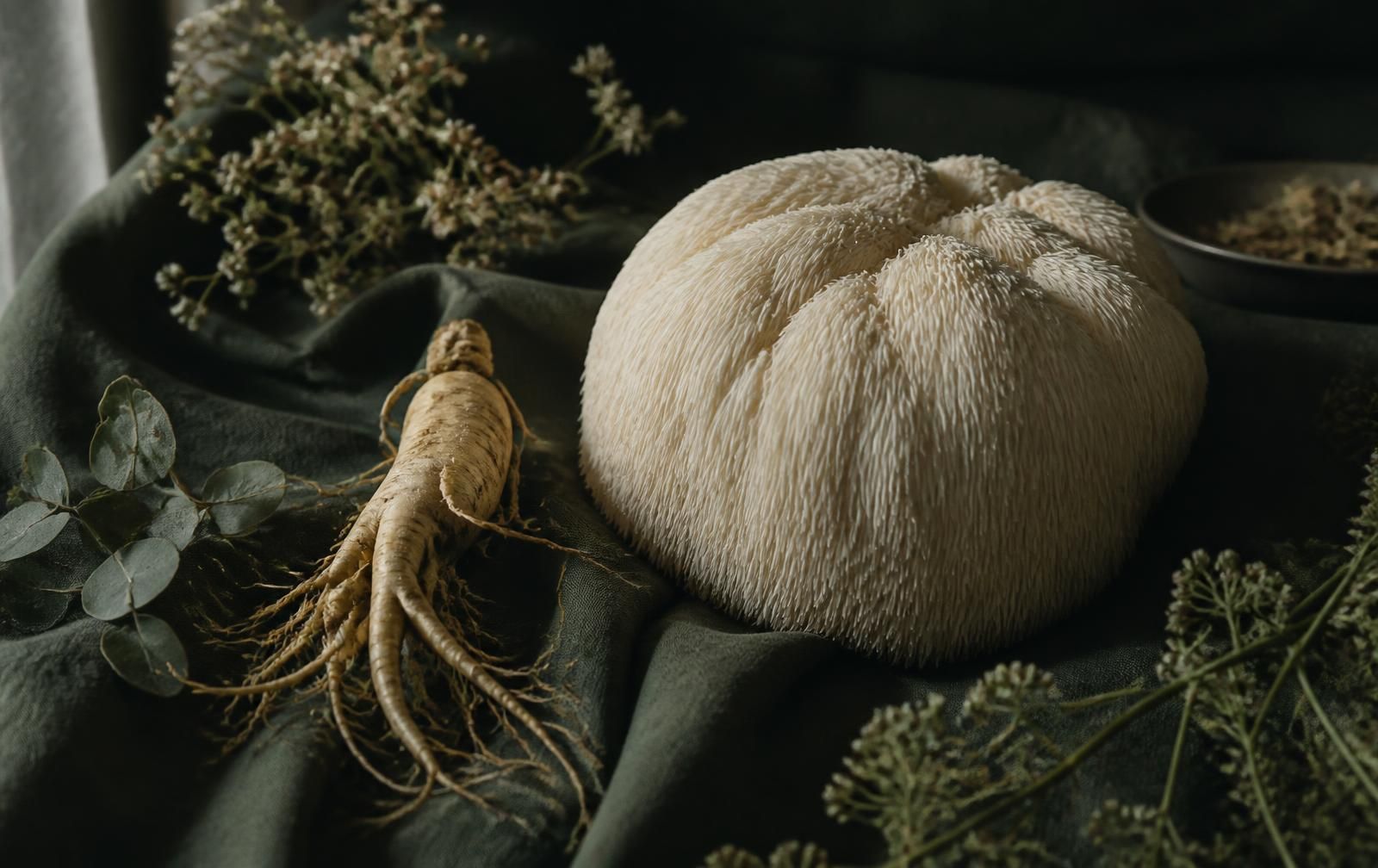
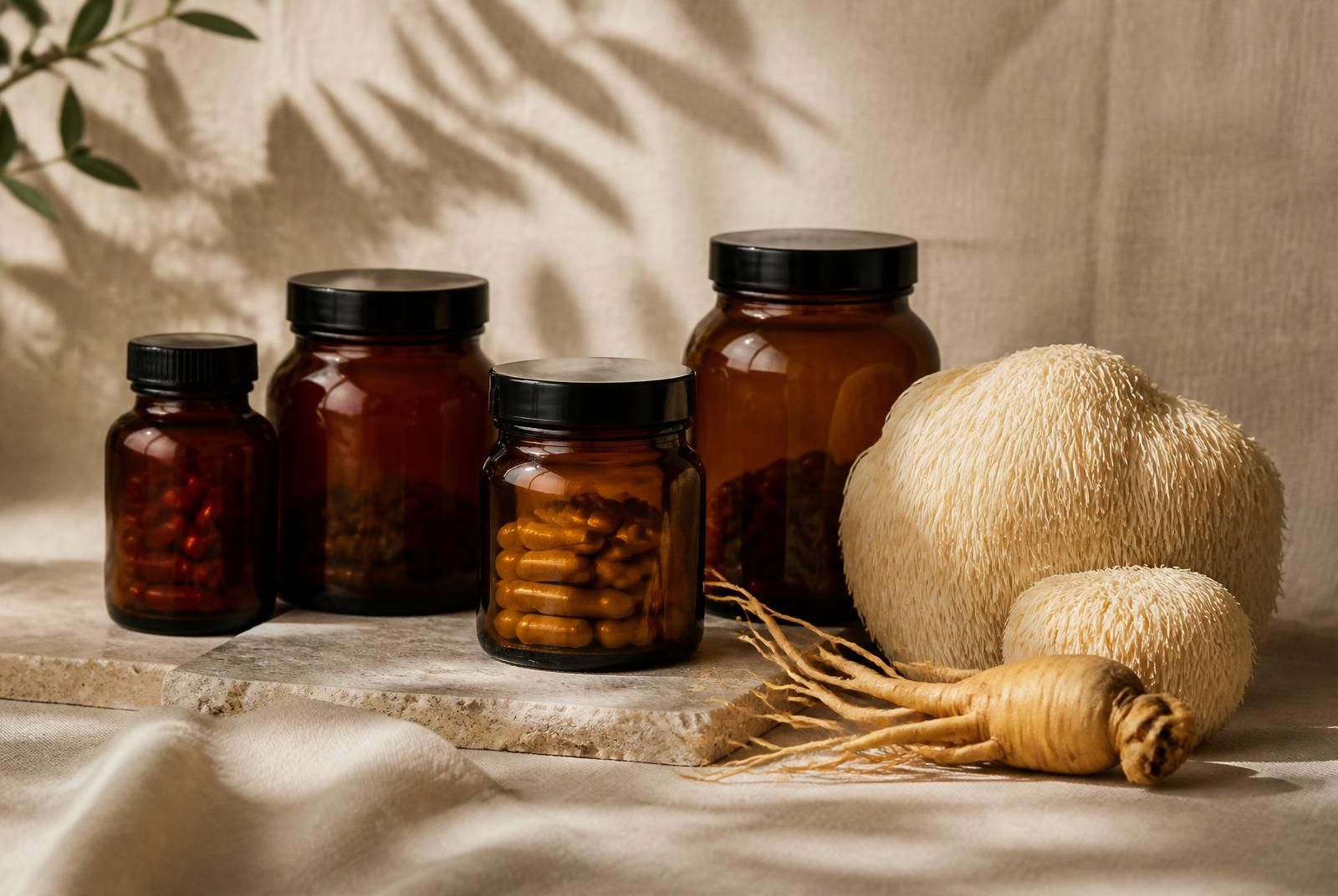
Ginseng roots mature for years before harvest, and the finest were once presented to Korean and Chinese royalty as vitality tonics. It has anchored traditional practice across East Asia for over two millennia.
The Herbarium / N° 09
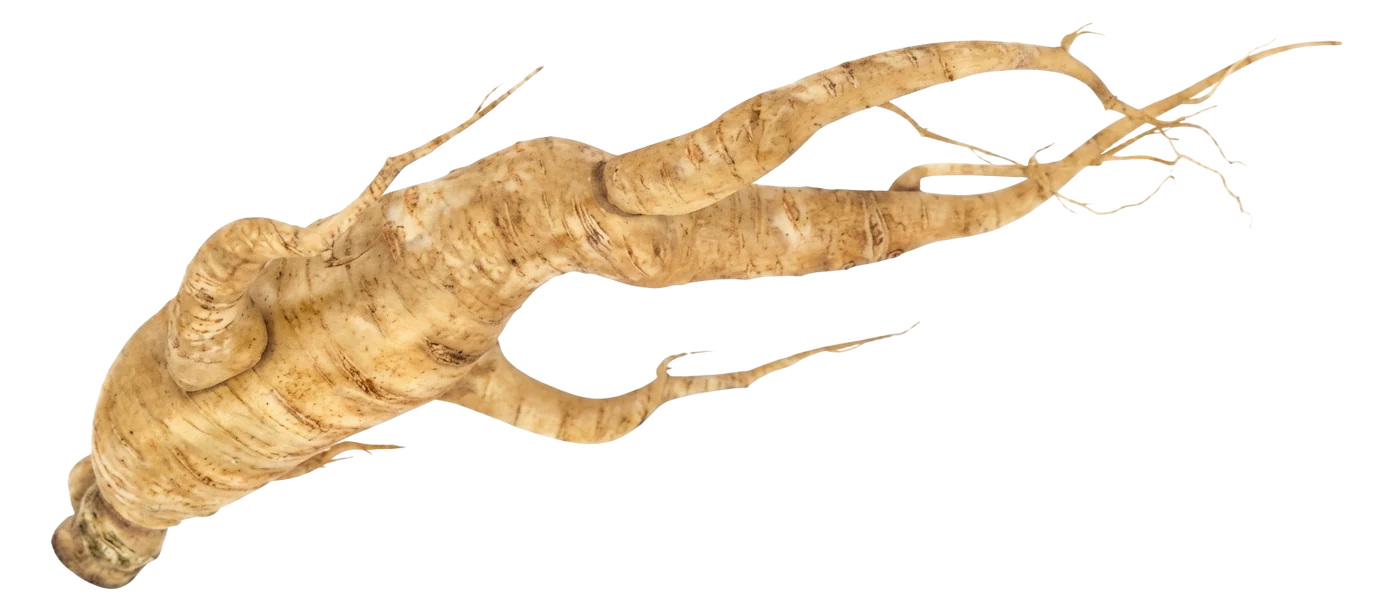
Korean Ginseng
Panax ginseng
Adaptogen
The most storied root in Eastern herbalism, panax, from the Greek for 'all-healing'.
Panax roots matured for years before harvest in East Asia, then concentrated to a 10:1 extract, the equivalent of 2,000mg of root in two gummies.
- Ginsenosides
- The saponin family extracts are standardised against.
- Polysaccharides
- A secondary fraction studied for immune signalling.
Root extract standardised for ginsenoside content. Korean-grown Panax ginseng, a different species from American or Siberian 'ginseng'.
Panax ginseng carries one of the largest clinical literatures of any botanical, spanning cognition, fatigue and immune measures. Quality varies enormously with ginsenoside standardisation.
- Panax comes from the Greek panakeia, 'all-healing'. The genus was named optimistically.
- Roots are graded by age; six-year roots are the traditional standard and the most valuable.
- 'Red' ginseng is simply the same root steamed and dried, which changes its ginsenoside profile.
Panax ginsengRed ginsengInsam
Traditional use reflects historical and cultural practice, not licensed health claims. Always read the label and consult a healthcare professional if unsure.
Where you'll find it
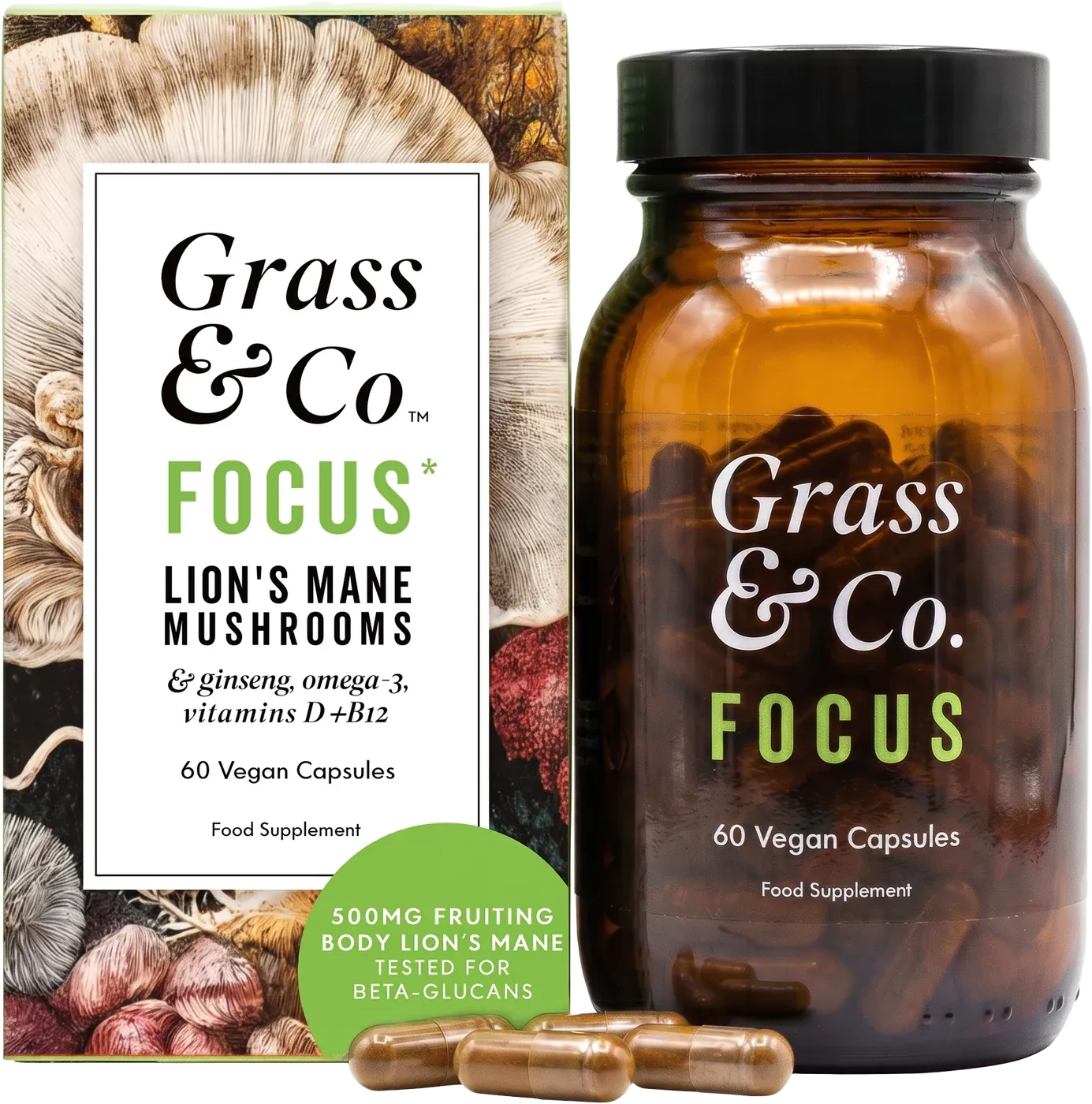
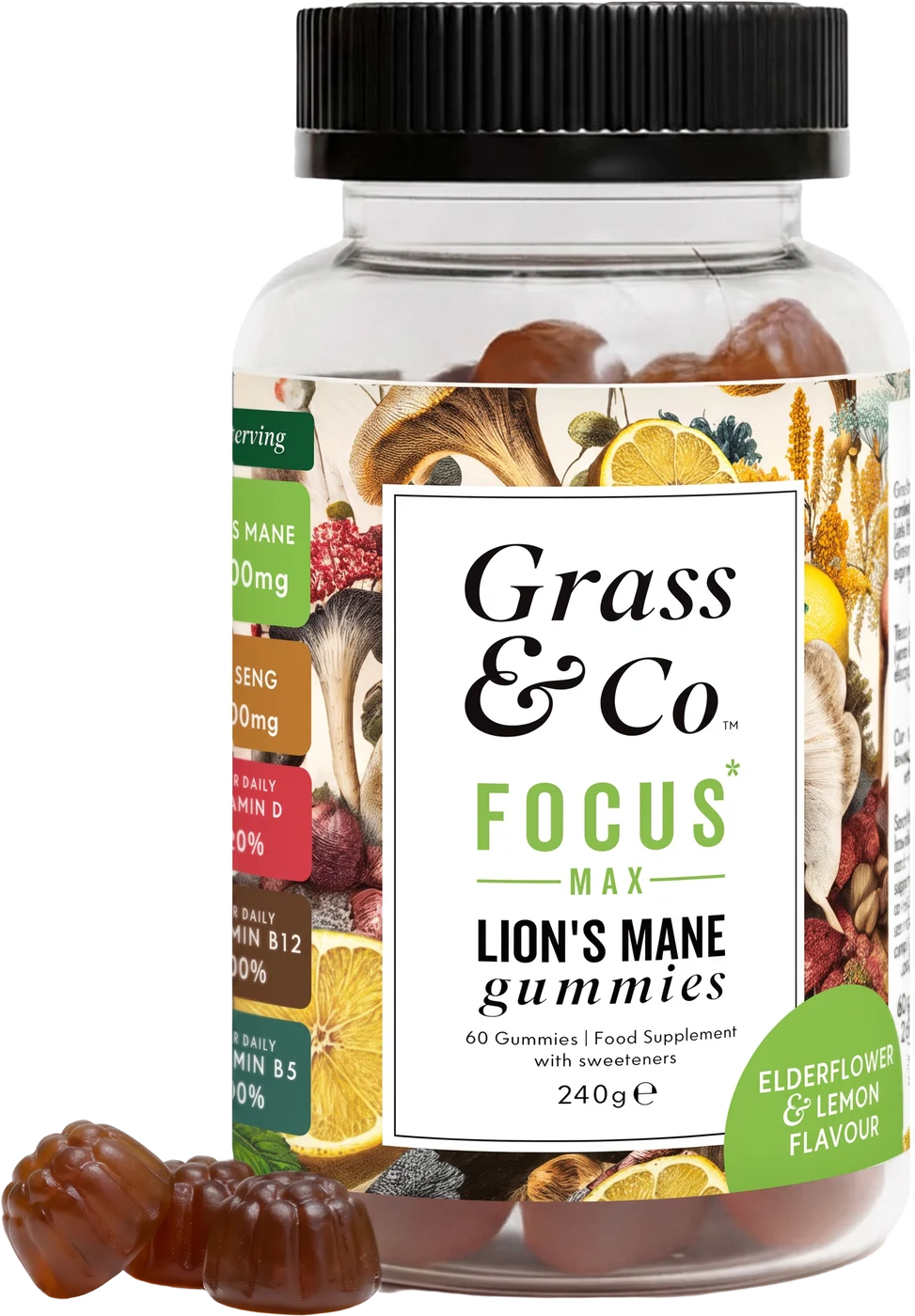
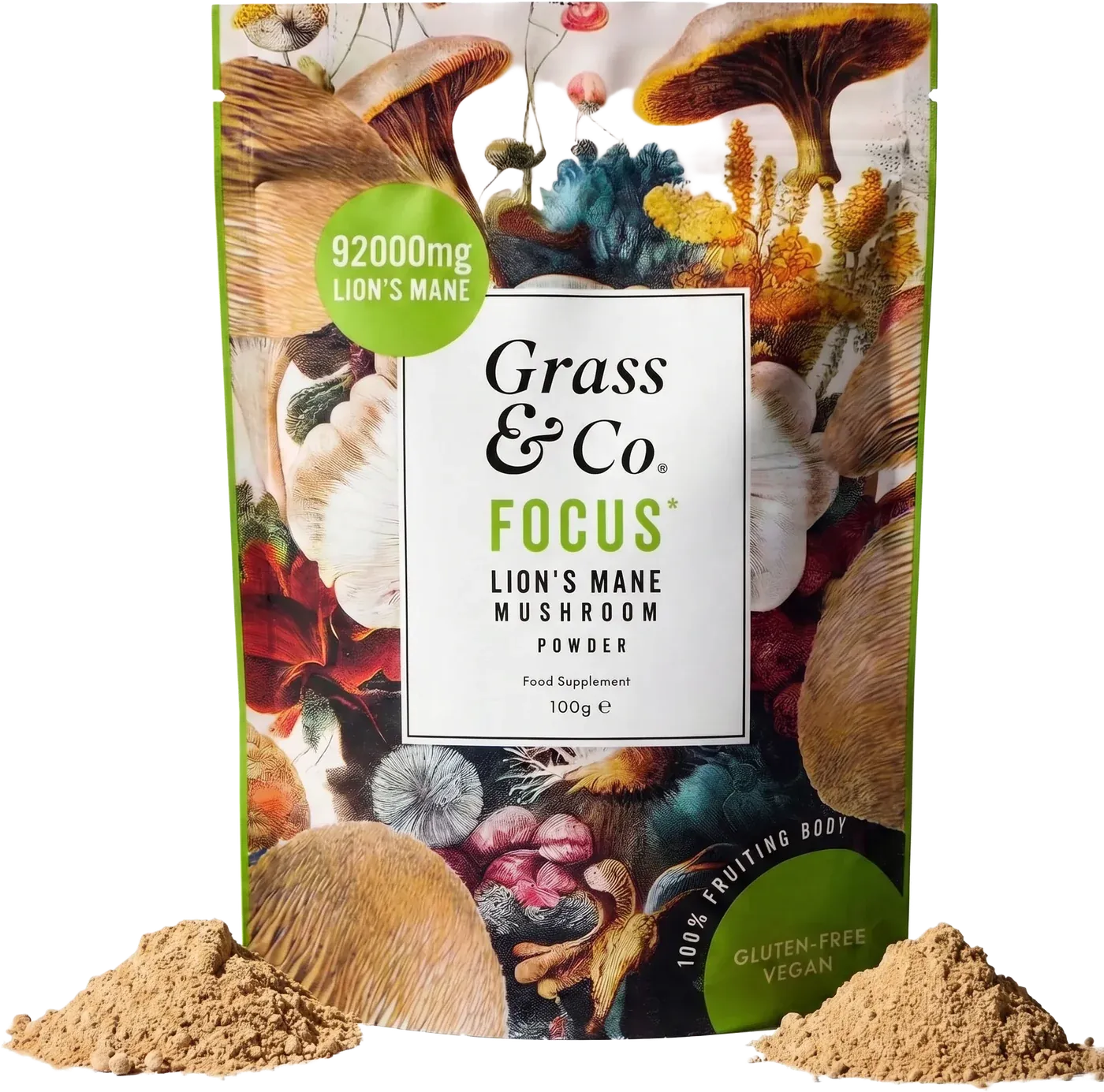
Korean Ginseng in the range

Field notes