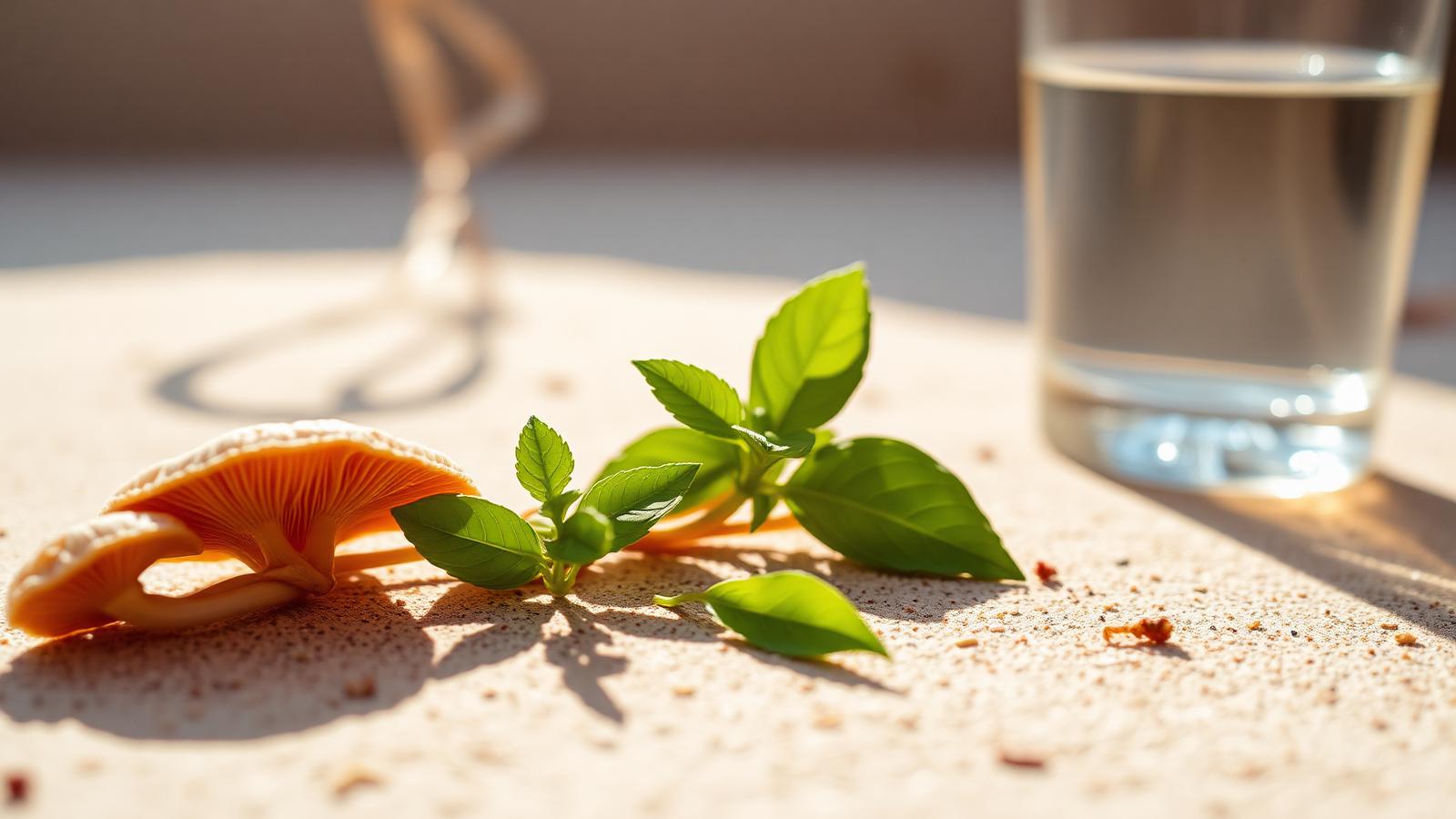
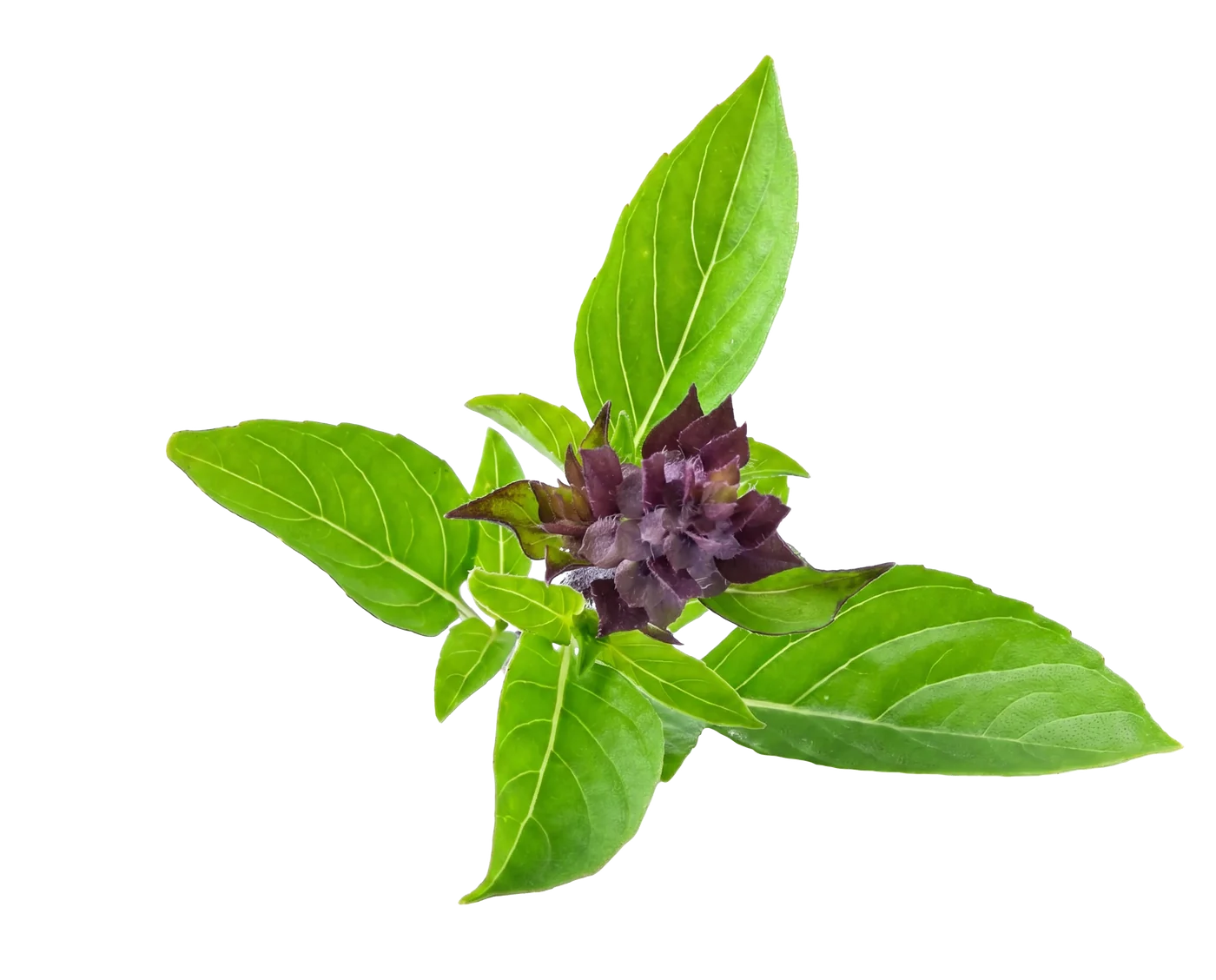
Revered in Ayurveda as an 'elixir of life', Holy Basil has been sipped as a daily tea for millennia to promote calm balance and clarity. It's traditionally planted near temples and homes as a guardian herb.
The Herbarium / N° 08
Holy Basil
Ocimum sanctum
Adaptogen
Tulsi, a plant so valued in India that it grows in a place of honour in courtyards across the country.
Grown in India, Tulsi's homeland, where it has been cultivated beside temples and courtyards for thousands of years.
- Eugenol
- The aromatic compound also found in clove.
- Ursolic acid
- A triterpene common in aromatic herbs.
- Rosmarinic acid
- A polyphenol shared with rosemary and sage.
Leaf extract, standardised and used in our calming blends alongside Ashwagandha.
Tulsi has a substantial ethnobotanical record and a growing set of small clinical studies on stress and wellbeing measures in India.
- Tulsi is grown in courtyards across India and treated as sacred rather than merely medicinal.
- It is a different plant from the sweet basil in pesto, though they're cousins.
- The leaves are peppery and clove-like, that's the eugenol.
TulsiOcimum sanctumThe queen of herbs
Traditional use reflects historical and cultural practice, not licensed health claims. Always read the label and consult a healthcare professional if unsure.
Where you'll find it