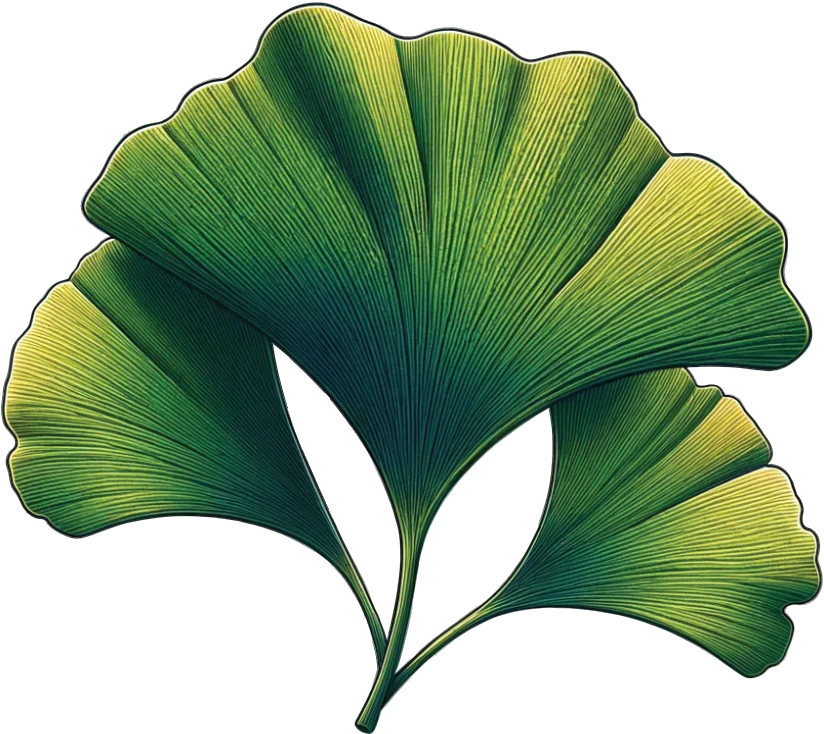
Ginkgo trees survive for over a thousand years, and Chinese temple gardens have protected them for just as long. The fan-shaped leaves have been used in traditional practice for circulation and cognitive support for centuries.
The Herbarium / N° 12
Ginkgo
Ginkgo biloba
Botanical
A living fossil, this tree species has barely changed in 200 million years.
From ginkgo trees cultivated in China, where temple gardens have protected the species for over a thousand years.
- Flavone glycosides
- Standardised extracts are benchmarked at 24%.
- Terpene lactones
- Ginkgolides and bilobalide, unique to the species.
Standardised leaf extract, used where circulation and attention overlap.
Ginkgo is one of the most-prescribed botanicals in Europe with a large clinical literature on cognition and circulation, though results across trials are inconsistent.
- Ginkgo is a living fossil, effectively unchanged for 200 million years, with no close living relatives.
- Six ginkgo trees survived within two kilometres of the Hiroshima blast and are still alive.
- Only the leaves are used; the fruit of the female tree smells notoriously of rancid butter.
Ginkgo bilobaMaidenhair treeYin xing
Traditional use reflects historical and cultural practice, not licensed health claims. Always read the label and consult a healthcare professional if unsure.
Where you'll find it