Lion's mane is the most bought functional mushroom in Britain and the least well explained. Most of the jars on the shelf tell you a milligram number and nothing else, not which part of the mushroom is in there, not how much of it is actually mushroom, not what the extract was standardised to. This is a ranked guide to the ones worth your money, written by a brand that makes four of them.
We have put ours first. You would expect that, so weigh it accordingly and check the batch tests we publish. Everything else on this list earns its place by being genuinely good at something, and we say where each one beats us. Formulations and prices change; every claim about another brand comes from their public product pages at the time of writing.
The Grass & Co. lion's mane range, by strength
Before the ranked list, the thing people actually ask us: which of ours is strongest, and which should I be taking? All four are built on the same principle, organic fruiting body extract, no mycelium-on-grain, no exceptions, and they differ in dose and in habit.
| Product | Lion's mane per serving | Format | Best for |
|---|---|---|---|
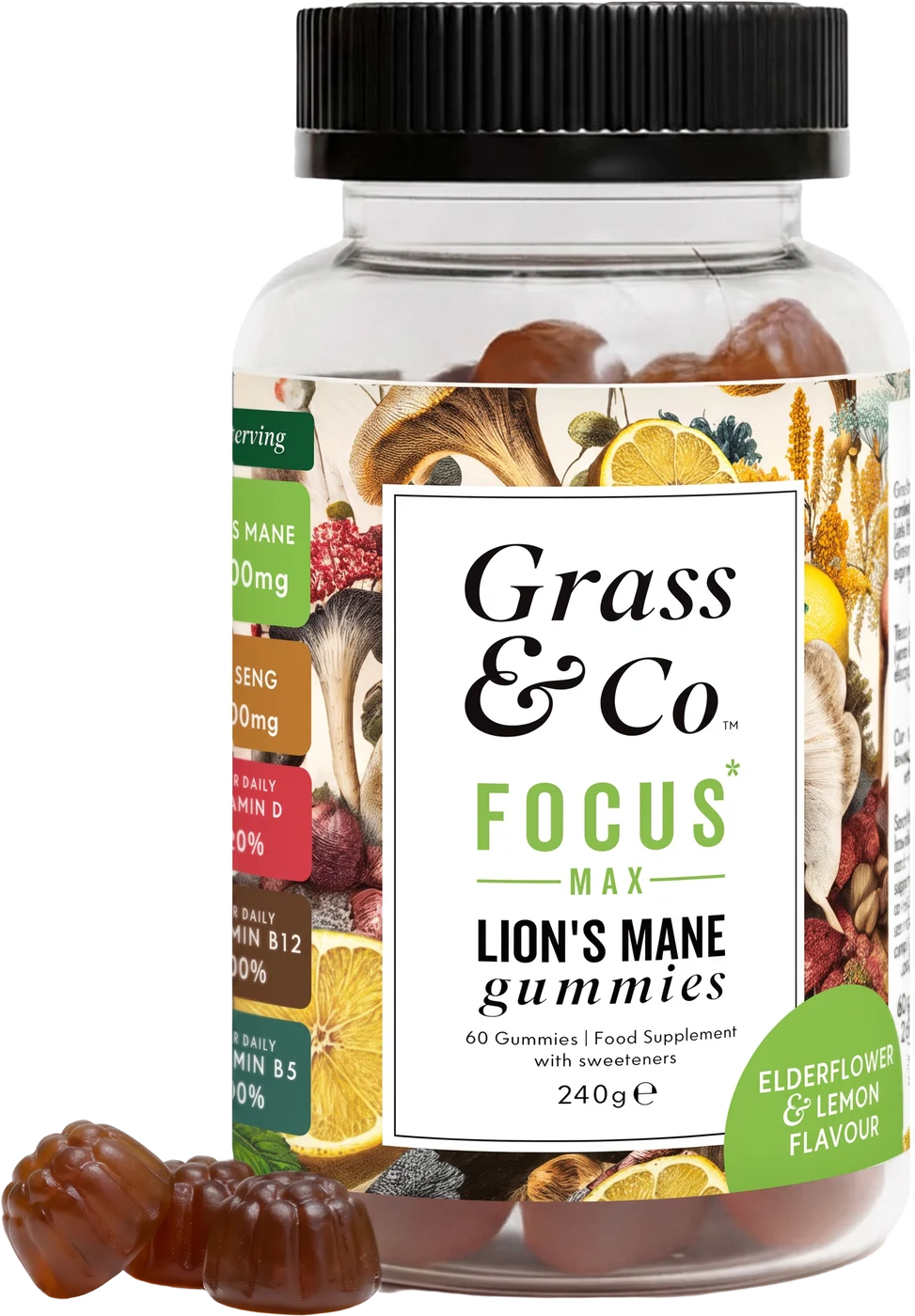
| FOCUS MAX gummies | Actives from 5,000mg dried, as a 10:1 extract, over 8x the concentration of the daily capsule | Two elderflower & lemon gummies | Highest strength, no water, pocket-sized |
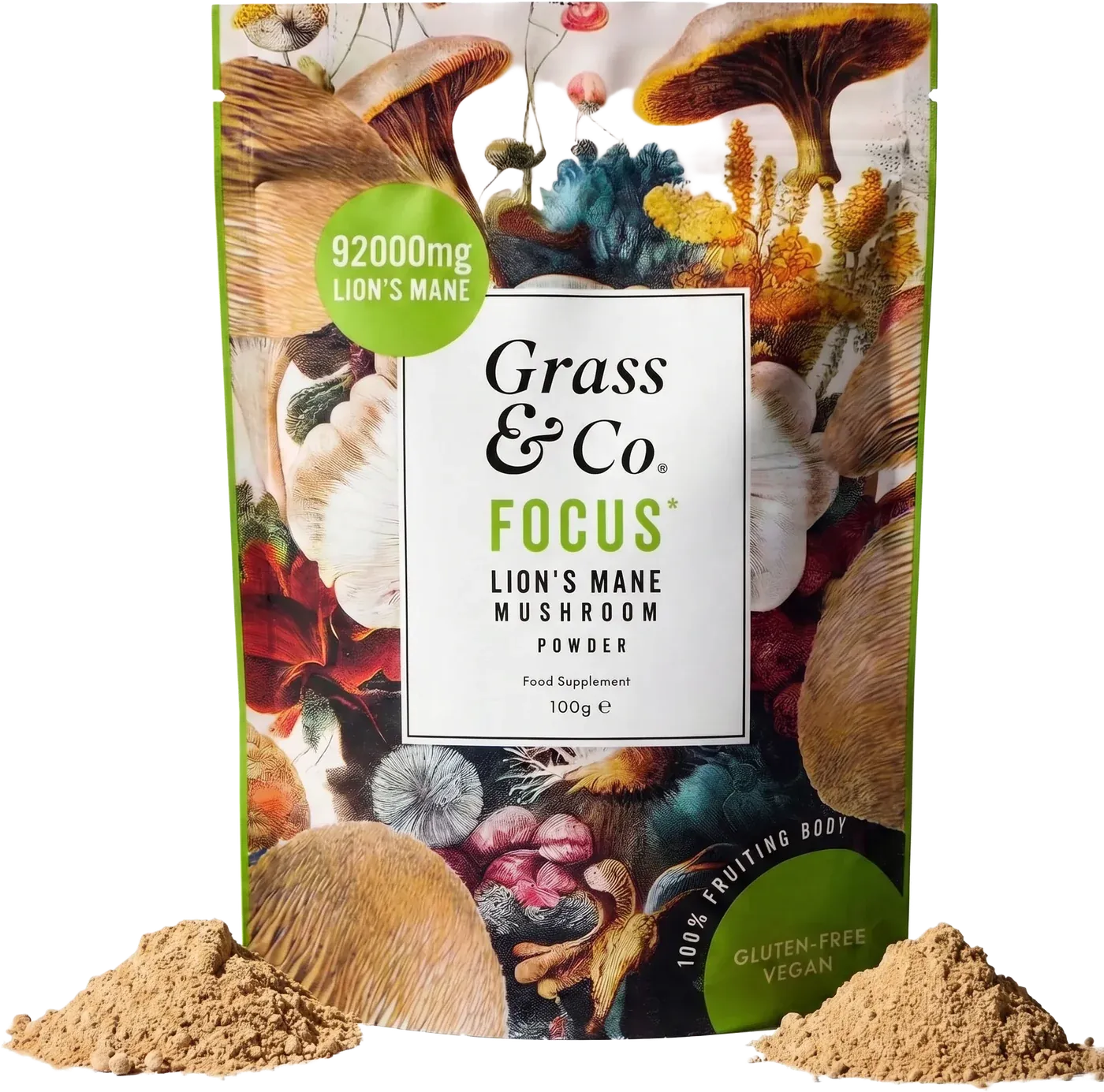
| FOCUS powder | 2,000mg organic fruiting body | One scoop, stirred into anything | Higher daily dose, flexible amount |
| FOCUS capsules | 600mg organic fruiting body | Two capsules daily | The everyday baseline, easiest to stick to |
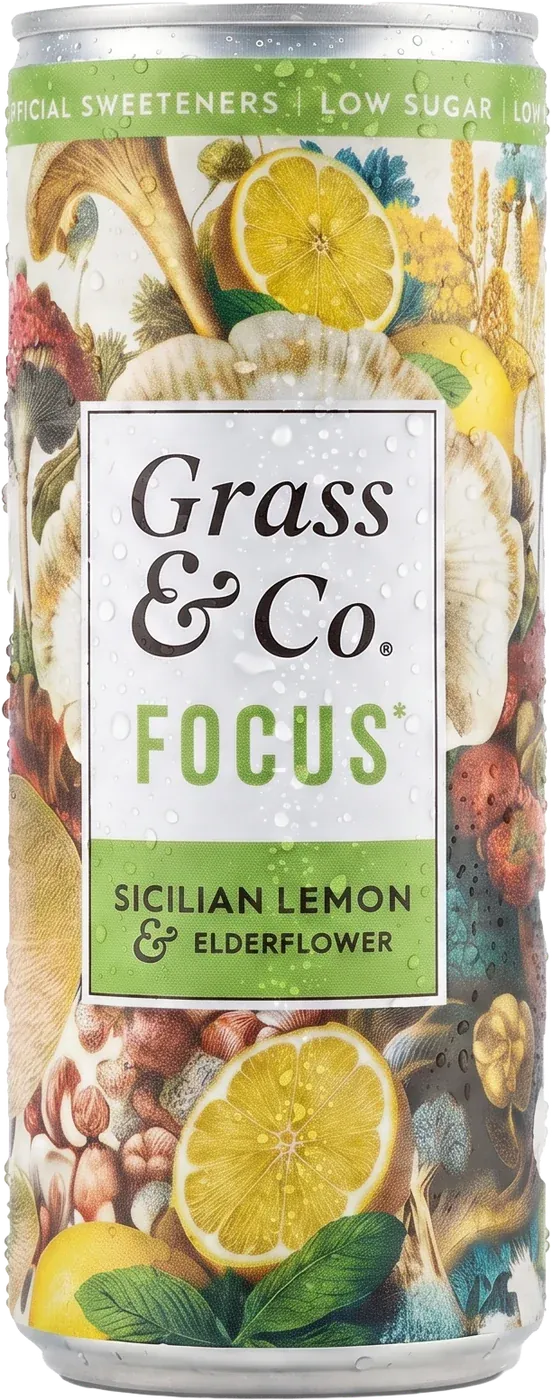
| Liquid FOCUS | 1,000mg | 250ml can, caffeine-free | Replacing an afternoon coffee |
| ACTIVE greens | Included alongside 16 other ingredients | One scoop, apple & ginger | Broad daily foundations rather than a lion's mane dose |
The strength ladder runs gummies, powder, drink, capsule. The adherence rate, in our experience, runs almost exactly the other way round. Pick the habit you will actually keep, a 600mg capsule taken every day beats a 5,000mg equivalent abandoned in March.
How we ranked the field
Four questions, in order of how much they matter. They are the same four we set out in how to read a mushroom supplement label.
- Fruiting body or mycelium? Mycelium is usually grown on grain, and the grain often stays in the finished powder.
- Is there a beta-glucan figure? This is the number that separates an extract from milled grain. Milligrams alone tell you how much powder is in the capsule, not how much of it is mushroom.
- Can anything on the label legally make a claim? No health claim has been authorised for lion's mane in the UK. Vitamins and minerals do carry authorised claims. A product with only mushroom in it has nothing it can lawfully say.
- Can you see the batch tests without emailing anyone?
1. Grass & Co. FOCUS, Lion's Mane, Ginseng, Omega-3 & B12
Best overall, and the one we make.
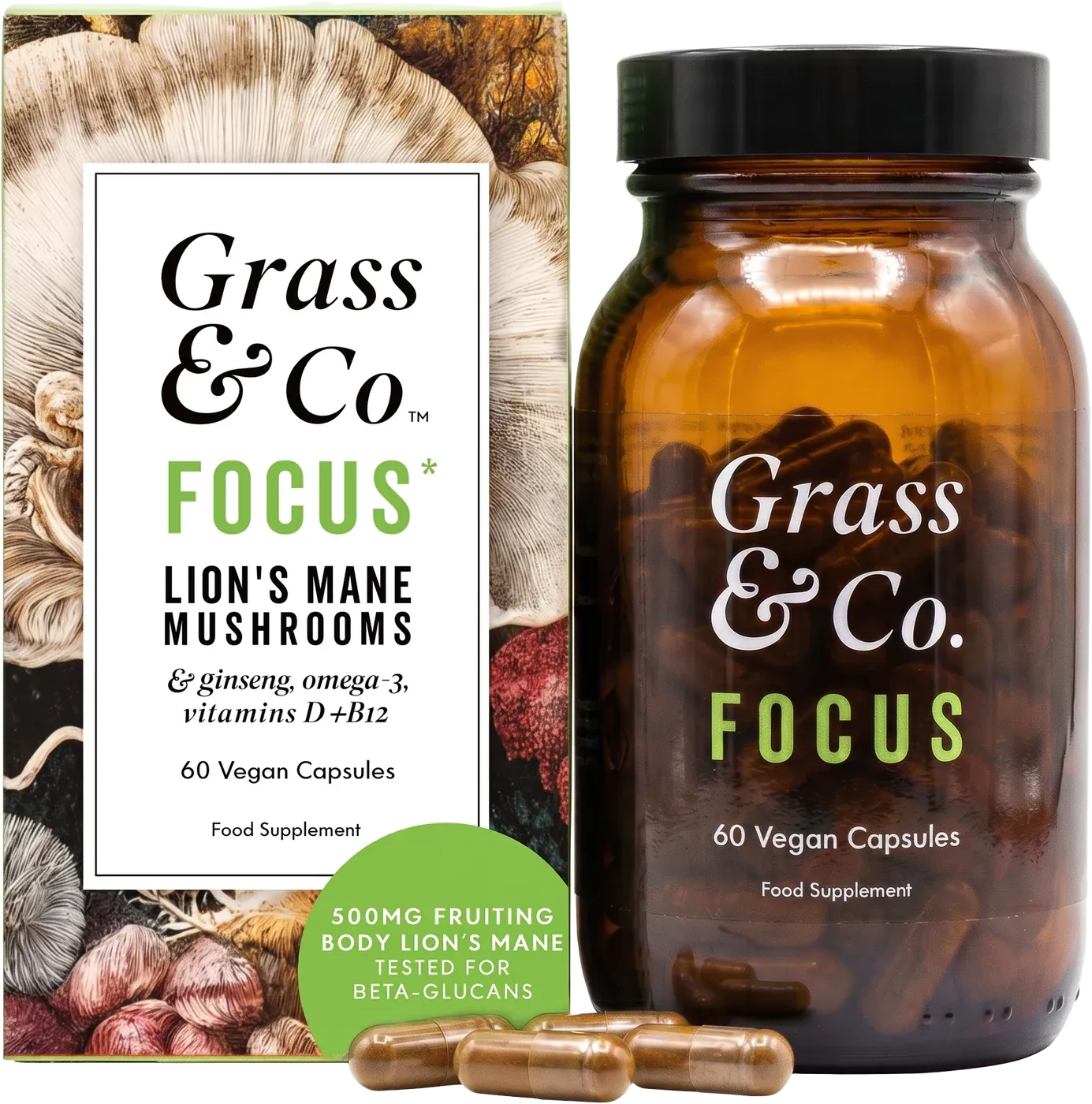
600mg of organic lion's mane fruiting body extract, batch-tested for beta-glucans, with Korean ginseng, algal omega-3 DHA and vitamins B12 and D. The mushroom is the character of the blend; the authorised nutrients do the work the label is allowed to describe.
Pros: fruiting body only, so the beta-glucan figure means something; certificates of analysis published for every batch, not on request; authorised nutrient claims on the pack; Vegan Society registered, organic certified, sourcing verified by Provenance; four formats so you can pick the habit rather than the pill.
Cons: not the cheapest per capsule, fruiting-body extract and algal DHA cost more than grain powder and fish oil; two capsules a day, not one; contains ginseng, so not suitable in pregnancy, while breastfeeding, or alongside blood-thinning or blood-sugar medication without speaking to your GP.
2. Bristol Fungarium Lion's Mane
Best British-grown single ingredient.
Organic certified lion's mane grown and extracted in Somerset, sold as a dual-extract tincture. It is about as short a supply chain as this category offers in the UK, and the growing and extraction are done by the same people who sell it.
Pros: UK-grown fruiting body, Soil Association organic, genuinely traceable; tincture format absorbs fast and needs no capsule shell.
Cons: single-mushroom, so nothing on the label can carry an authorised cognition claim; a dropper bottle is easier to forget than a pill; small-batch production means it sells out.
3. Bulk Lion's Mane Extract
Best on price.
If budget is the deciding factor, Bulk is the honest answer and we will not pretend otherwise. Large-volume, low-margin, extract rather than raw powder, at a fraction of the specialist per-capsule cost.
Pros: by far the lowest cost per serving here; no marketing premium.
Cons: single ingredient, no supporting nutrients, no authorised claim; batch-level transparency thinner than the specialists offer; you are buying a commodity ingredient, not a designed formulation.
4. London Nootropics Flow
Best for replacing the third coffee.
Adaptogenic coffee sachets with lion's mane and rhodiola alongside the caffeine. The proposition is a better-behaved coffee rather than an alternative to one, which is honest. Our own version of that problem is in the fourth coffee problem.
Pros: fits an existing habit with zero effort; genuinely pleasant; portable.
Cons: mushroom doses are modest by design because caffeine does much of the work; no help if you are trying to cut stimulants; per-sachet cost mounts up.
5. Holland & Barrett own-brand Lion's Mane
Best for buying it today.
Sometimes the winning feature is that you can walk in and pick it up. Competent, widely stocked, frequently on offer. We know that shelf well, our CBD range has lived on it since 2020.
Pros: immediate availability; regular multibuy pricing; easy returns.
Cons: specification varies between lines, so read the carton rather than the shelf tag; typically no published beta-glucan figure; single-ingredient formulation.
Now the part that actually decides it: the & Co.
Every product above is competing on the same axis, how much lion's mane, how pure, how cheap. We think that axis is the wrong one, and the reason is in our name.
A mushroom never works alone. In the wild it grows in company: in soil, alongside other organisms, as part of a system. We build our blends the same way. Need state = functional mushroom + adaptogen × vitamins. Take any one of those three out and you have something less than the sum.
The mushroom sets the character
Organic lion's mane fruiting body, hot-water extracted, tested for beta-glucans on every batch. Never mycelium grown on grain, because then you are paying mushroom prices for starch. The mushroom is why you came, and it is the part we are least willing to compromise on, but it is also, honestly, the part with the earliest evidence base. We set that out plainly in lion's mane, honestly.
The adaptogen gives it direction
In FOCUS that is Korean ginseng, the most-studied cognitive botanical in the world. An adaptogen is what points the formula at a need state rather than leaving it as a general-purpose mushroom. It is the difference between a jar of one ingredient and a product designed for a specific afternoon.
The vitamins make it provable
This is the part almost nobody else does, and it matters more than the milligram count. In the UK, no health claim has been authorised for any functional mushroom, so a single-ingredient lion's mane product is legally mute. It cannot tell you what it is for. Vitamins and minerals, by contrast, carry claims that have been assessed and authorised.
So FOCUS pairs the mushroom with algal omega-3 DHA, which contributes to the maintenance of normal brain function, and vitamins B12 and D, which contribute to normal psychological and nervous system function. Those are not our words. They are the regulator's, and we are allowed to use them because the formulation earns them.
What that means in practice
| A typical lion's mane capsule | The Grass & Co. blend | |
|---|---|---|
| Mushroom part | Often unstated, or mycelium on grain | 100% organic fruiting body, always stated |
| Potency figure | Milligrams of powder | Beta-glucans, batch-tested and published |
| What the label may claim | Nothing authorised | Authorised nutrient claims from the vitamins |
| Evidence you can check | "Third-party tested" on the carton | Certificates of analysis for every batch |
That is the & Co. the company the mushroom keeps. More on how we build it, and the sourcing behind it, in the science and how we source and extract.
What we would tell a friend
If you want the best-formulated lion's mane in the UK and you care about the label being defensible, take ours, the capsule for the habit, the powder if you want the higher dose, the gummies if you are never at home. If you want the shortest supply chain and British growing, buy Bristol Fungarium. If money is tight, buy Bulk and do not feel bad about it.
Whatever you choose, give it eight weeks. Every product on this page works by slow accumulation, not a switch. Nobody selling you lion's mane should be promising a Tuesday-afternoon transformation.
ONE GOOD THING,
EVERY SUNDAY MORNING.
A ritual, a recipe or something we've learned in the undergrowth, plus first dibs on new pours and stockist news. No noise, ever.