Centuries before 'superfood' was a word, the Aztecs harvested spirulina from Lake Texcoco and dried it into cakes called tecuitlatl, prized fuel for messengers and warriors running between cities.
The Herbarium / N° 14
Spirulina
Arthrospira platensis
Algae
Blue-green algae so nutrient-dense the Aztecs built a food culture around it.
Cultivated in controlled freshwater ponds, the clean, modern answer to the wild lake harvests of the Aztec era.
- Phycocyanin
- The blue pigment-protein, around 15% of dry weight.
- Complete protein
- Roughly 60% protein containing all essential amino acids.
- Iron & B vitamins
- The nutrient basis of authorised energy claims.
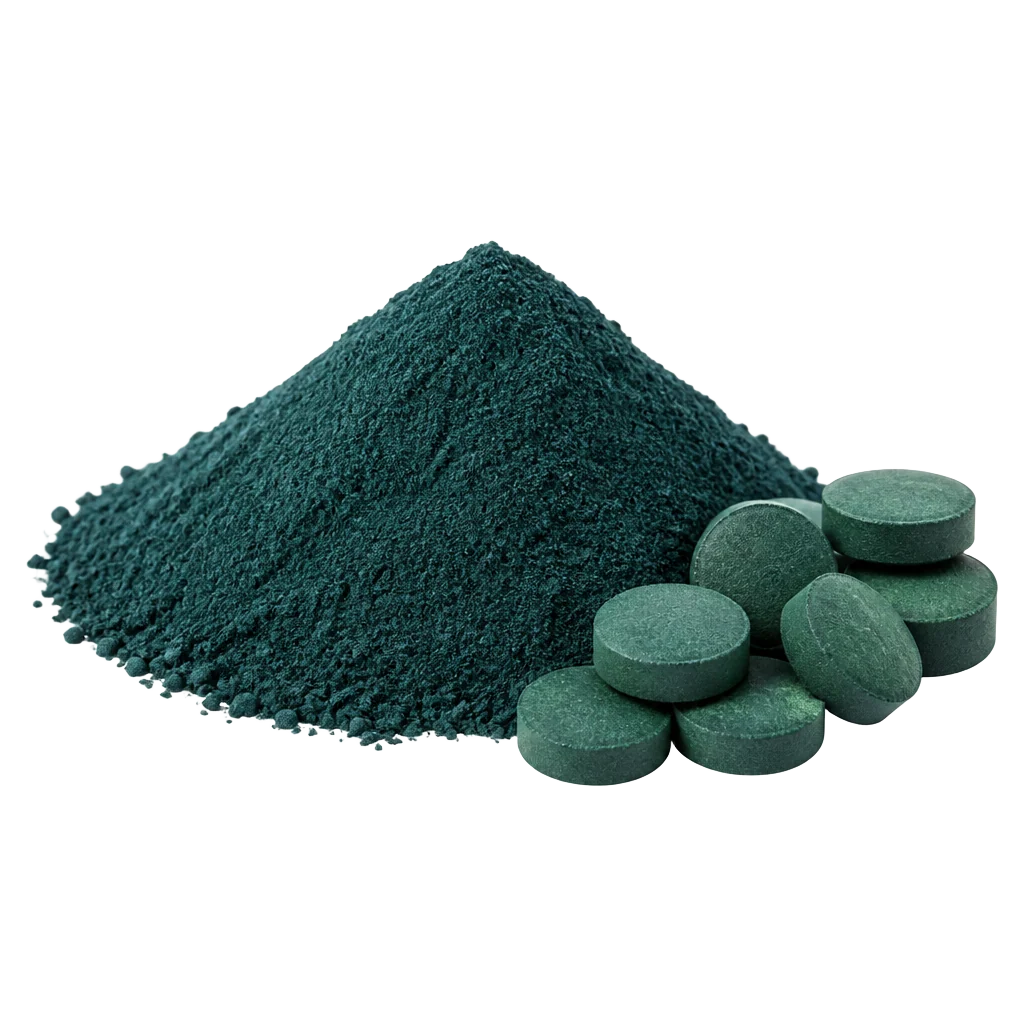
Whole dried algae from controlled freshwater cultivation, tested for heavy metals and microcystins.
Spirulina is one of the most nutritionally analysed microorganisms in food science, studied by NASA as a candidate crop for long-duration spaceflight.
- The Aztecs harvested it from Lake Texcoco and dried it into cakes called tecuitlatl.
- It's technically a cyanobacterium, not a plant or an alga in the strict sense.
- Source matters enormously, wild-harvested blue-green algae can carry toxins. Ours is cultivated and tested.
Arthrospira platensisBlue-green algaeTecuitlatl

Traditional use reflects historical and cultural practice, not licensed health claims. Always read the label and consult a healthcare professional if unsure.
Where you'll find it
Spirulina in the range
Field notes