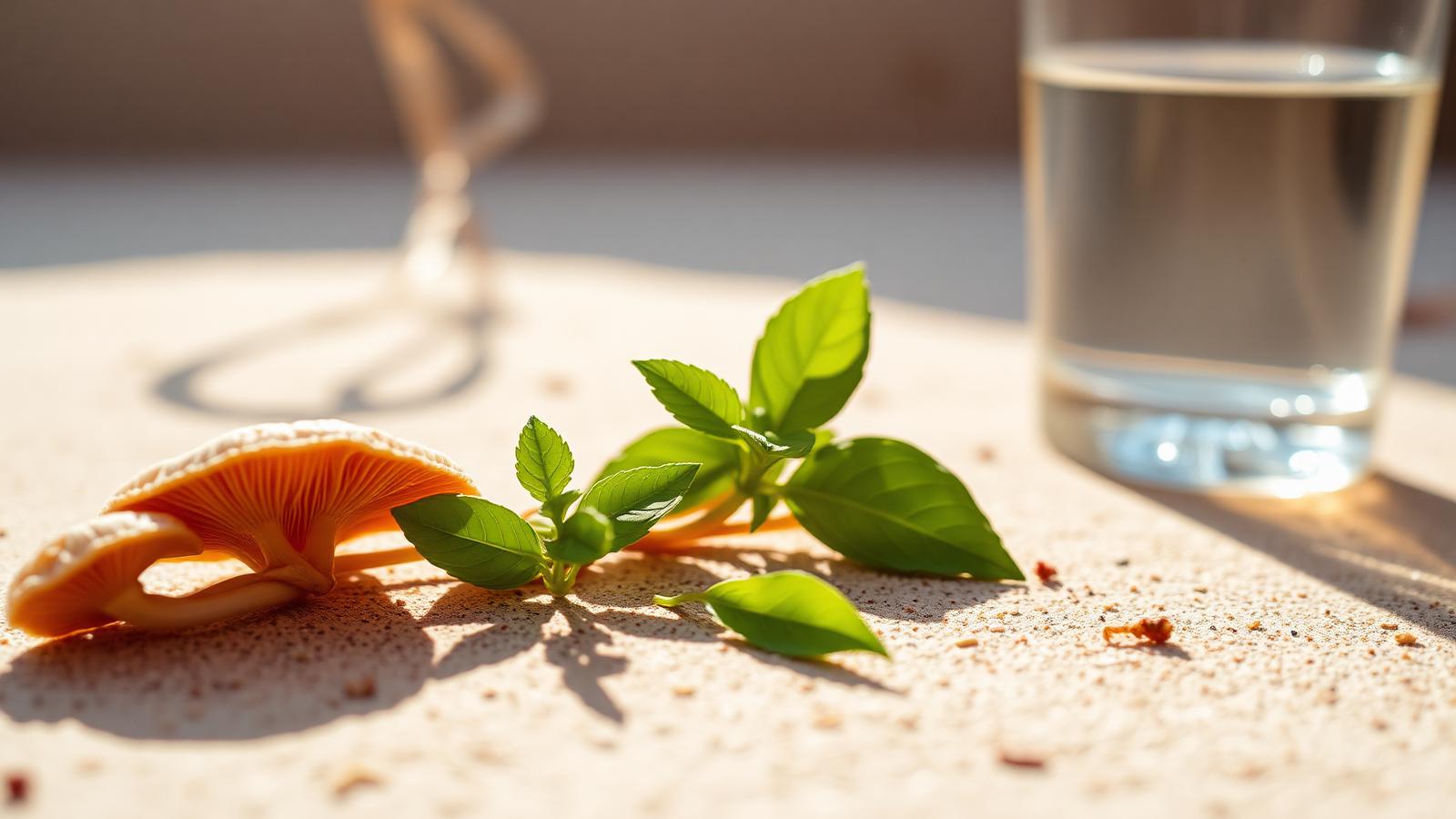
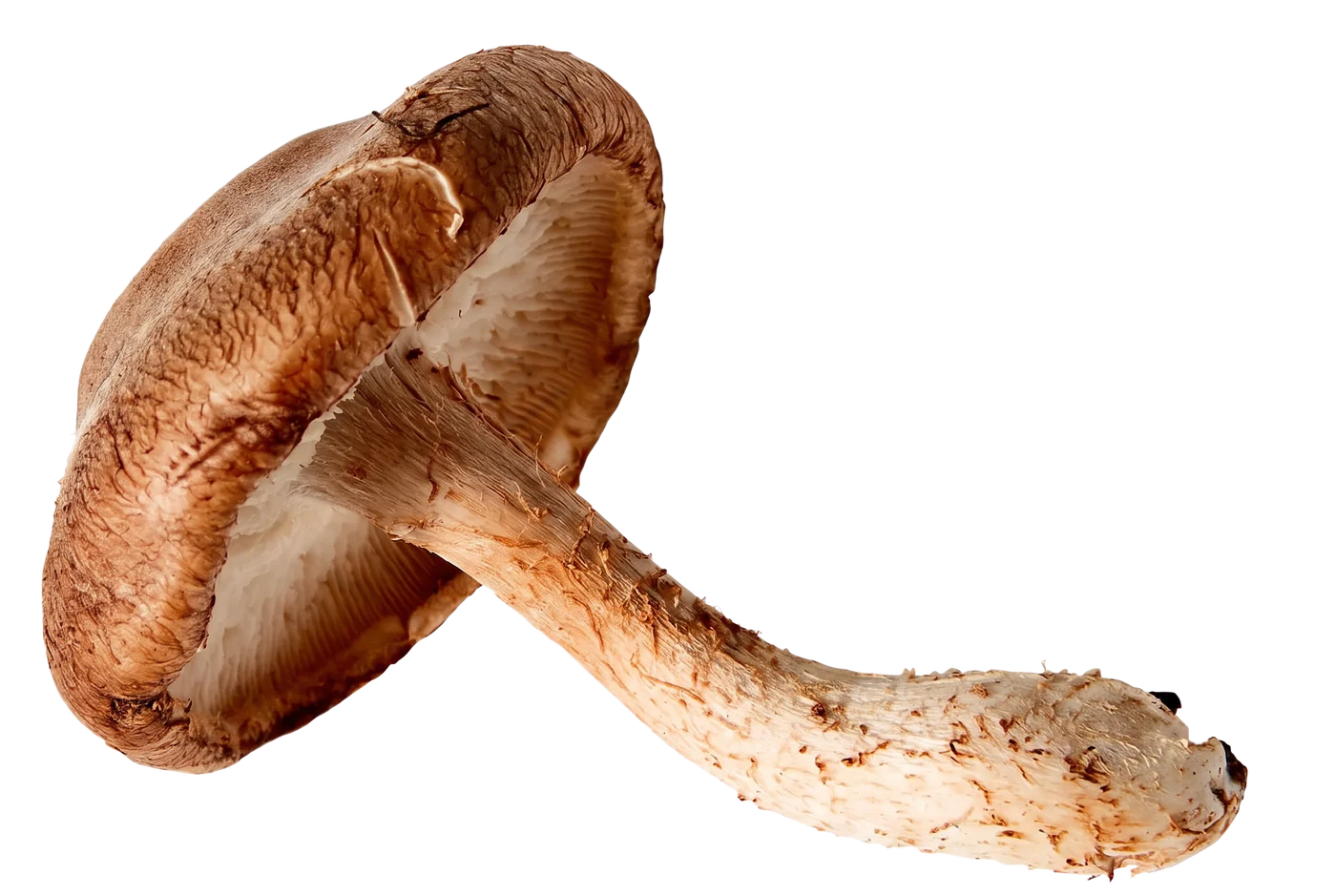
Shiitake cultivation began in China during the Song dynasty, making it one of the earliest farmed fungi in history. Alongside its culinary fame it has been dried, brewed and taken as a daily vitality tonic across East Asia ever since.
The Herbarium / N° 06
Shiitake
Lentinula edodes
Functional mushroom
The bridge between kitchen and apothecary, a mushroom people have grown with intent for over a thousand years.
Cultivated on hardwood, exactly as it has been since Song-dynasty China, the original intentionally farmed mushroom. Manufactured in the UK.
- Lentinan
- A beta-glucan isolated from Shiitake in the 1960s.
- Eritadenine
- A compound unique to this species.
- Ergothioneine
- An amino acid found in high levels in mushrooms.
Hot-water fruiting-body extract from log-grown Shiitake, used for its beta-glucan content rather than flavour.
One of the best-characterised edible mushrooms in nutrition science, with a long literature on its polysaccharides and sterols.
- 'Shii' is the Japanese name for the tree it traditionally grows on; 'take' simply means mushroom.
- Cultivation records date to at least 1209 in China, one of the oldest cultivated crops of any kind.
- Sun-dry Shiitake gills-up for a few hours and its vitamin D content rises measurably.
Xiang gu (fragrant mushroom)Black forest mushroom
Traditional use reflects historical and cultural practice, not licensed health claims. Always read the label and consult a healthcare professional if unsure.
Where you'll find it