Hops entered brewing around the 9th century, yet folk herbalists valued the cones long before, tucked into 'dream pillows' after harvesters were noticed growing drowsy in the fields at picking time.
The Herbarium / N° 20
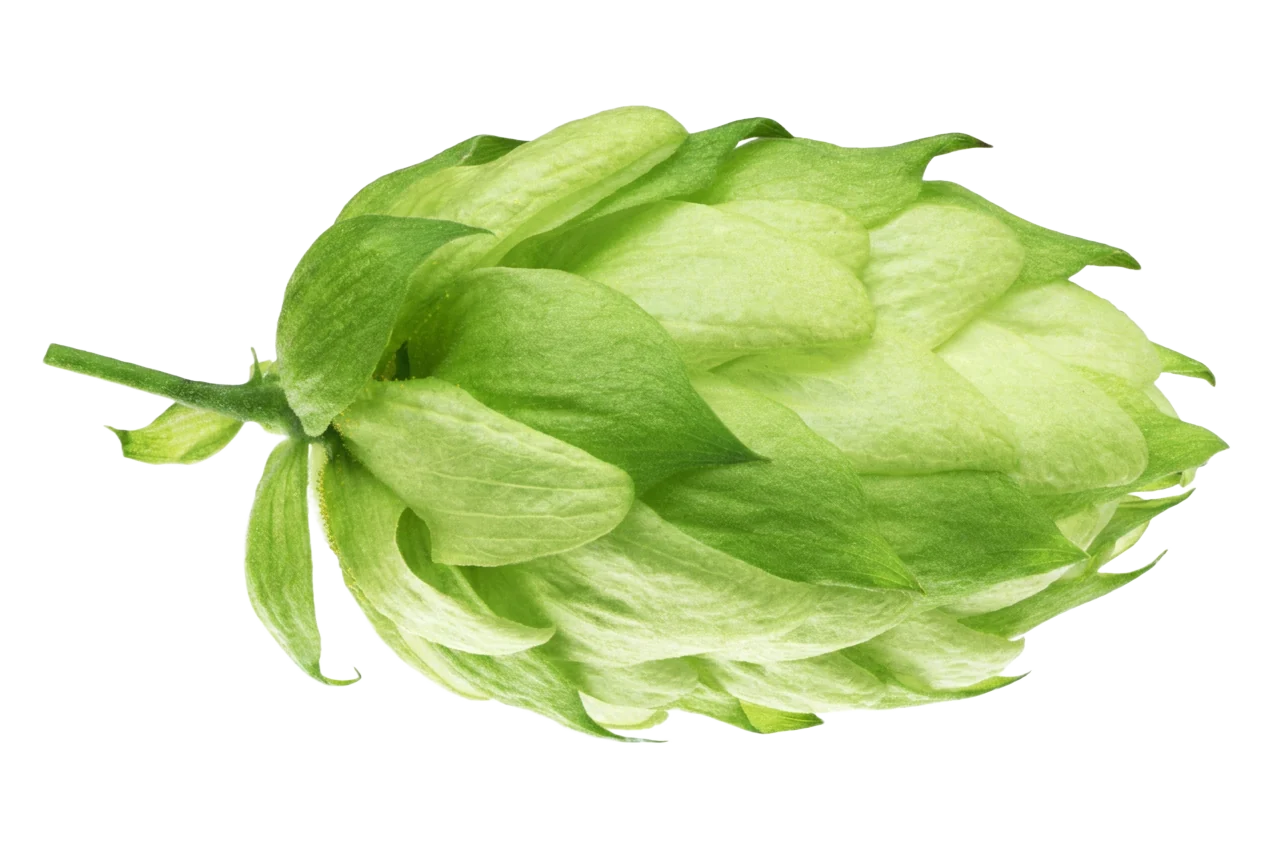
Hops
Humulus lupulus
Botanical
Better known for brewing, but hop pickers knew its sleepy secret centuries ago.
Humulus lupulus cones, harvested at full ripeness when their aromatic resins are richest.
- Alpha acids
- Humulone and friends, the bitterness in beer.
- Xanthohumol
- A prenylflavonoid unique to hops.
- 2-methyl-3-buten-2-ol
- The volatile studied in traditional sleep pillows.
Flower (strobile) extract, formulated with Valerian-style botanicals in our night blends.
Hops appear in European sleep monographs, most often combined with valerian, and are one of the older documented sedative botanicals in Western herbalism.
- Hop pickers were long observed to tire easily in the field, the earliest clue to the plant's sedative reputation.
- Hop pillows were prescribed to King George III for sleep.
- It's a close botanical relative of cannabis; both sit in the Cannabaceae family.
Humulus lupulusCommon hopBeer flower

Traditional use reflects historical and cultural practice, not licensed health claims. Always read the label and consult a healthcare professional if unsure.
Where you'll find it