Traded along the spice routes for over 3,000 years, ginger has been a fixture of Chinese and Ayurvedic practice, chewed, brewed and steeped as a warming daily tonic, especially around exertion and travel.
The Herbarium / N° 18
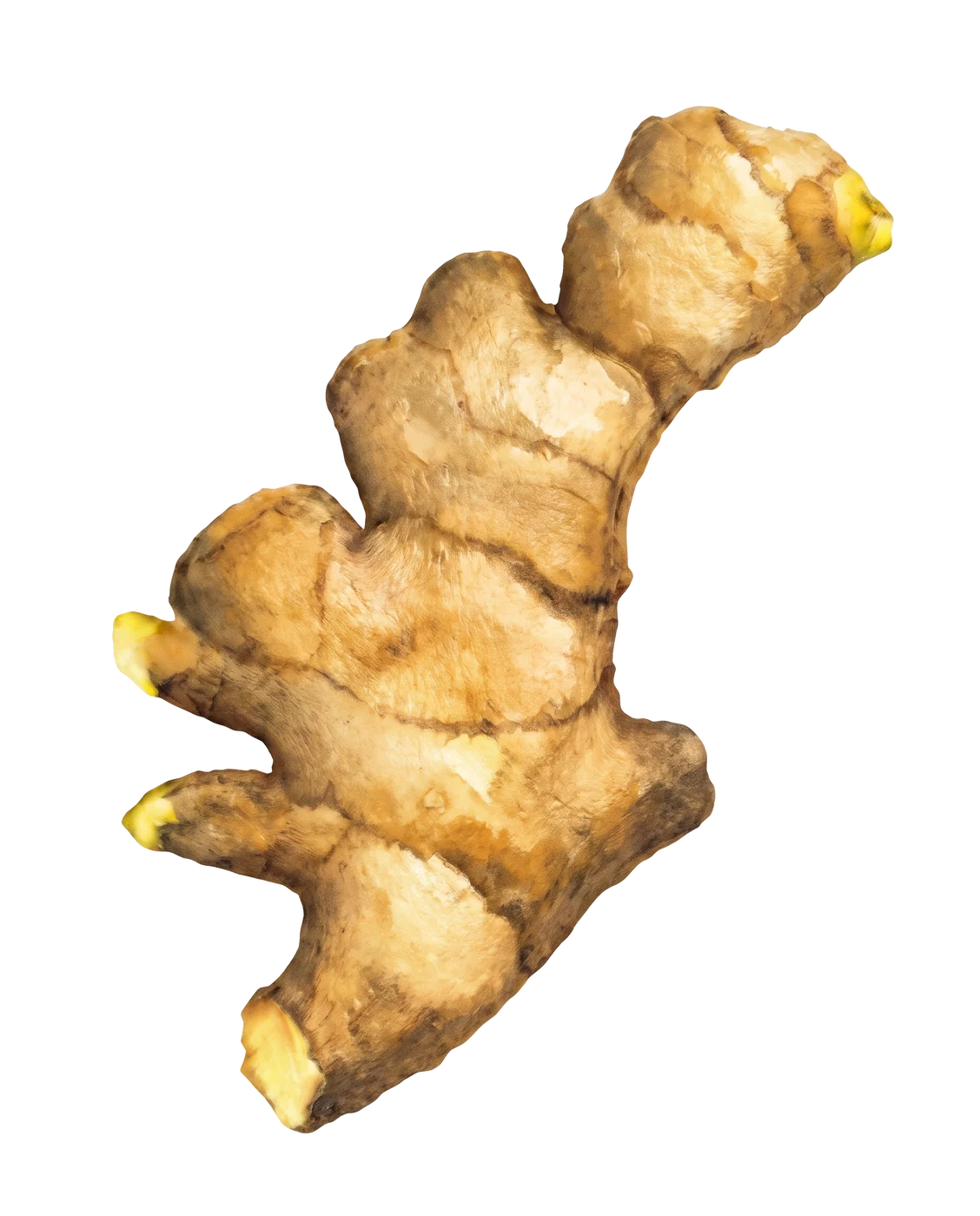
Ginger
Zingiber officinale
Botanical
The warming root that travelled the ancient spice routes in both directions.
Zingiber officinale rhizomes from tropical Asia, dried and extracted for a concentrated, consistent dose.
- Gingerols
- The pungent compounds in fresh root.
- Shogaols
- Formed when ginger is dried or heated, hotter, sharper.
- Zingerone
- The sweeter note in cooked ginger.
Root extract, used for warmth in our topical balm and drinks.
Ginger has one of the strongest clinical evidence bases of any culinary botanical, particularly for nausea, and is used in mainstream clinical settings.
- Ginger has never been found growing wild, it has been cultivated for so long its origin is lost.
- Drying converts gingerols into shogaols, which is why ground ginger bites differently than fresh.
- It travelled the Roman spice routes and was worth roughly a sheep per pound in medieval England.
Zingiber officinaleAdrakSheng jiang
Traditional use reflects historical and cultural practice, not licensed health claims. Always read the label and consult a healthcare professional if unsure.
Where you'll find it