Somewhere in the last fifteen years we solved boredom, and almost nobody stopped to ask whether it needed solving.
It happened without announcement. There was no moment when boredom was declared eradicated. It simply became structurally impossible to experience, because the gaps it used to live in were filled. The queue. The bus. The four minutes waiting for the kettle. The advert break. The walk to the shop. Every one of those is now occupied, and the occupation is so total that most people cannot remember what those minutes used to feel like.
They felt like nothing much. That was the point.
What boredom was for
Boredom has a bad name, largely because we associate it with childhood and being told to go and find something to do. But the thing that happens when a mind has nothing to grip is not idleness. It is a specific and quite active state.
Neuroscientists call it the default mode network, which is a dull name for something interesting: the pattern of brain activity that switches on when you are not focused on a task. It is associated with autobiographical memory, with thinking about other people, with imagining the future, and with the particular loose associative drift where unrelated things suddenly connect.
Everyone knows this experience even if they do not know the term. It is why solutions arrive in the shower. It is why the answer to the problem you wrestled with all afternoon turns up on the walk home, unbidden, from nowhere. The mind was still working. It just needed you to stop supervising.
You cannot get there while scrolling. The default mode network switches off the moment attention is captured, and a phone is a device engineered with great sophistication to capture attention. Every gap you fill is a gap that was doing something.
The exhaustion nobody can explain
There is a very common complaint that goes something like this: I did not do much today, and I am shattered.
It does not make obvious sense. The day contained no physical labour and no particular difficulty. And yet there is a specific kind of tiredness at the end of it that sleep does not seem to fix.
A reasonable explanation is that the day contained no rest. Not no sitting down, no rest. Attention was engaged continuously from waking to sleeping, switching between things at a rate that would have been unimaginable to anyone born before 1990, and never once left to idle. The body rested. The attention never did.
We treat this as a modern productivity problem and reach for productivity solutions. Better systems. Time blocking. An app to manage the apps. All of which involve more attention, applied to the problem of attention, which is a bit like trying to get out of a hole with a bigger shovel.
Doing nothing is harder than it sounds
Try it. Not meditation, which is a discipline with instructions and a goal and therefore a task. Just nothing.
Stand at the kettle and wait for it without reaching for anything. Take the walk without a podcast. Sit in the passenger seat and look out of the window for twenty minutes.
Most people find this genuinely uncomfortable for the first few minutes, which is itself informative. There is a pull to fill it, and the pull is strong, and noticing the strength of it is the most useful thing you can do. It is not a moral failing. It is the intended result of an enormous amount of engineering by some very clever people who were paid to make it so.
The discomfort passes. Usually around the four or five minute mark, something loosens, and the mind starts to wander in the old way. It feels like remembering something you did not know you had forgotten.
Go touch grass
The phrase started as an insult. Telling someone to go outside and touch grass was a way of saying you have been online too long and it shows.
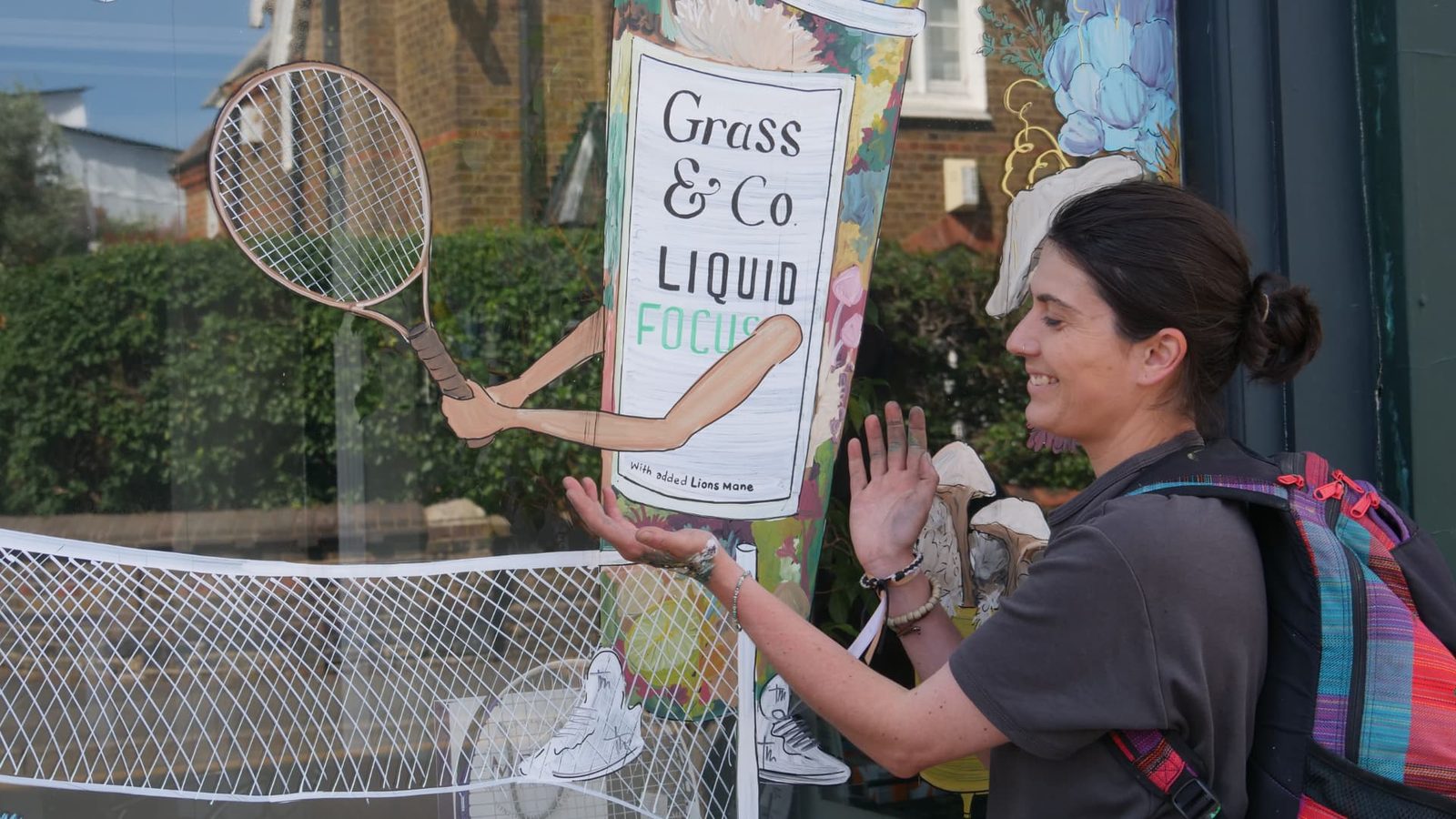
We took it as a brand line because the insult contains a decent instruction. Outside is a place where nothing is optimised for your attention. The trees are not trying to retain you. Nothing out there has an engagement metric. It is the last environment most of us encounter that is genuinely indifferent to whether we are looking at it, and that indifference is exactly what makes it restful.
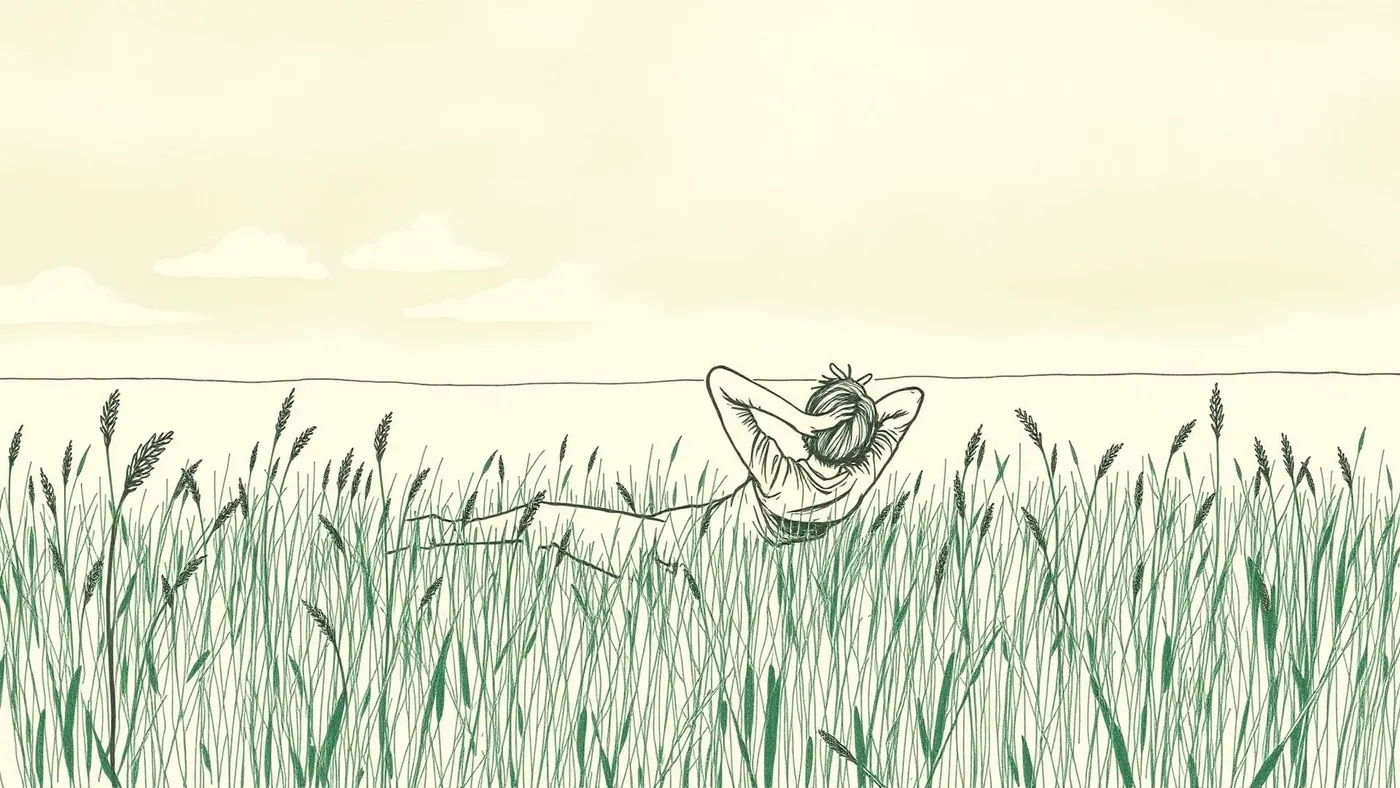
You do not need a routine or an app or a thirty day challenge. You need to be somewhere that is not asking you for anything, for long enough that you get bored, and then a bit longer than that, until the boredom turns into the other thing.
That is the whole method. It is free, it is available immediately, and it is the single most underrated thing you can do for your head.
The kettle is boiling. Try just watching it.
ONE GOOD THING,
EVERY SUNDAY MORNING.
A ritual, a recipe or something we've learned in the undergrowth, plus first dibs on new pours and stockist news. No noise, ever.